
 Posted by
 Dolphins, Mines, and the Strait of Hormuz: The Navy’s Most Unusual Weapon
Posted by Robert Frump
In the narrow, silted waters of the Persian Gulf—where visibility is poor, currents are unpredictable, and the seabed hides more than it reveals—the United States Navy has at times deployed a very special smart weapon.
Not a drone.
Not a sensor array.
Not a billion-dollar warship.
It’s Flipper – or his 2026 stand-in.
Dolphins regularly are used in mine-detection – a sort of water-based K-9 Corps. Sea Lions also have been drafted into anti-mine service. That’s not news.
The question is whether the Navy will deploy Flipper in the Straits of Hormuz at a time when conventional mine sweeping capabilities are seriously in question.
The Navy has not responded to a query on the matter, but success records indicate the Navy mammal corps is among the most effective counter mine measures available.

Key Takeaways
- The U.S. Navy uses dolphins and sea lions in mine-detection, highlighting their unique capabilities in murky waters.
- Dolphins have proven effective in past conflicts, detecting mines and ensuring safe shipping lanes.
- The Marine Mammal Program raises ethical concerns regarding the use of highly intelligent animals in military operations.
- Sea lions assist by locating objects and monitoring for unauthorized swimmers, complementing the dolphins’ skills.
- Despite advancements in technology, marine mammals remain a vital part of naval mine warfare strategy.
Estimated reading time: 9 minutes
There is plenty of data to look at.
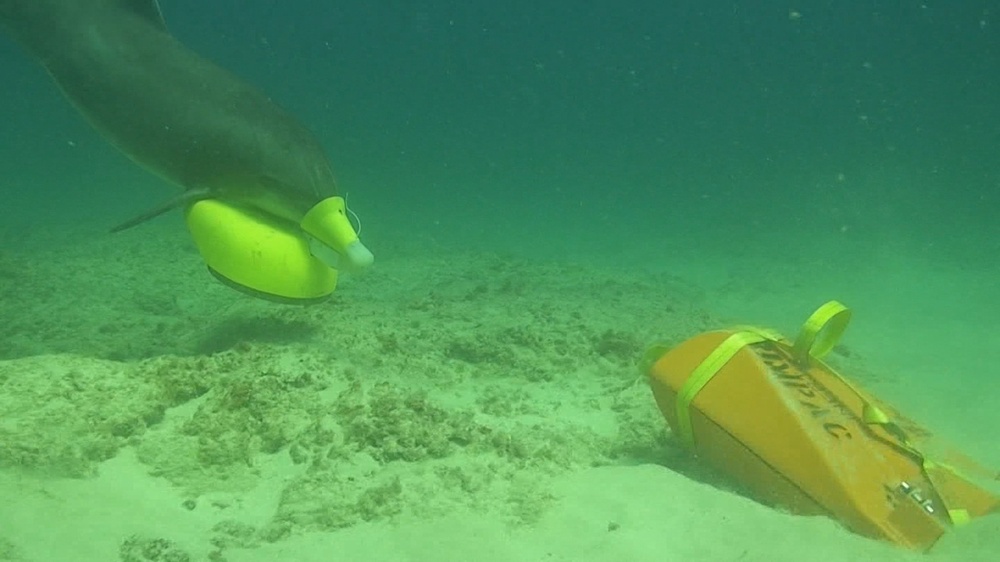

For more than six decades, the U.S. Navy’s Marine Mammal Program has trained bottlenose dolphins and California sea lions to perform some of the most delicate and dangerous tasks in naval warfare: detecting underwater mines, identifying hazards, and helping keep shipping lanes open.
It is a program that has been both quietly effective and persistently controversial—particularly in the context of a potential conflict with Iran, where mine warfare remains one of the most credible threats to global shipping.
A PROVEN TOOL IN GULF WATERS
Flipper at war is not a theoretical proposition.
In 1987, during the Iran-Iraq “Tanker War,” the U.S. Navy deployed dolphins to the Persian Gulf to help detect mines and guard against underwater threats.
More recently, in 2003, Navy dolphins helped clear the Iraqi port of Umm Qasr, detecting more than 100 mines and underwater booby traps so that humanitarian shipping could resume.
The operational logic was simple: in murky, cluttered environments, dolphins can do what machines often struggle to accomplish.
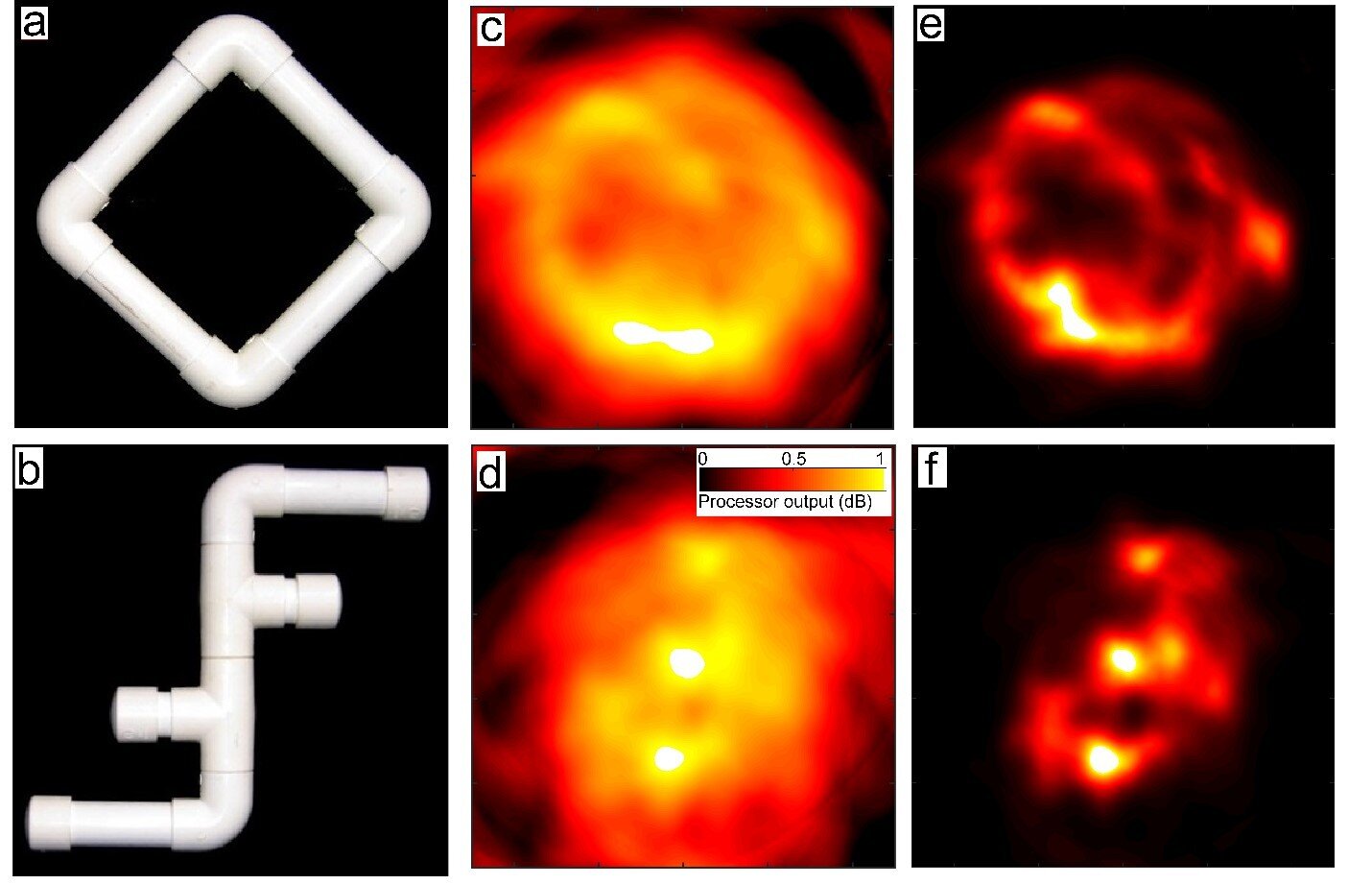
Their natural sonar—echolocation—is still, in some conditions, more effective than man-made systems at detecting objects buried in sediment or hidden among debris.
In a region like the Strait of Hormuz, where mines could be laid quickly and covertly, that capability is not trivial.

HOW A DOLPHIN FINDS A MINE
The process is in one sense is anagram low-tech.
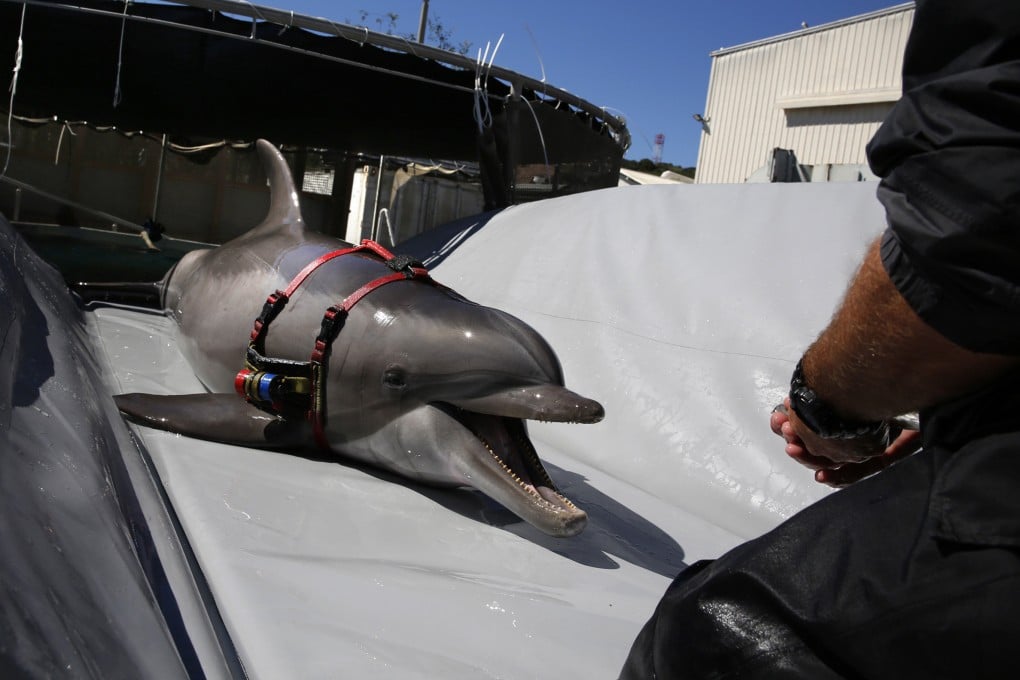
A dolphin is guided into a search area. It scans using echolocation. When it detects an object that does not belong—a mine or mine-like shape—it returns to its handler.
Then it goes back.
On the second pass, the dolphin attaches a marker—a buoy or transponder—so human divers or remote systems can neutralize the threat.
The dolphin does not destroy the mine.
It identifies it.
That distinction matters because the program has long maintained that its animals are not trained as weapons.
In fact, the Navy states clearly that it has never trained dolphins to attack ships or people, in part because the animals cannot reliably distinguish friend from foe.
They are, instead, highly specialized detectors.


THE ANIMALS THEMSELVES
The program is not abstract. It is built around individual animals—some of which have become well known within naval and scientific circles.
One of the earliest was Tuffy, a bottlenose dolphin who worked in the 1960s SEALAB experiments, carrying tools and messages between underwater habitats and the surface.
More recently, a Navy dolphin named Blue, now in his late 50s, has been part of long-term research into dolphin aging and health, reflecting the program’s scientific as well as operational role.
These are not anonymous assets. They are long-lived, highly trained animals with continuous human interaction over decades.
That fact sits at the center of the program’s ethical debate.

HUMANE CONCERNS — A REAL AND ONGOING DEBATE
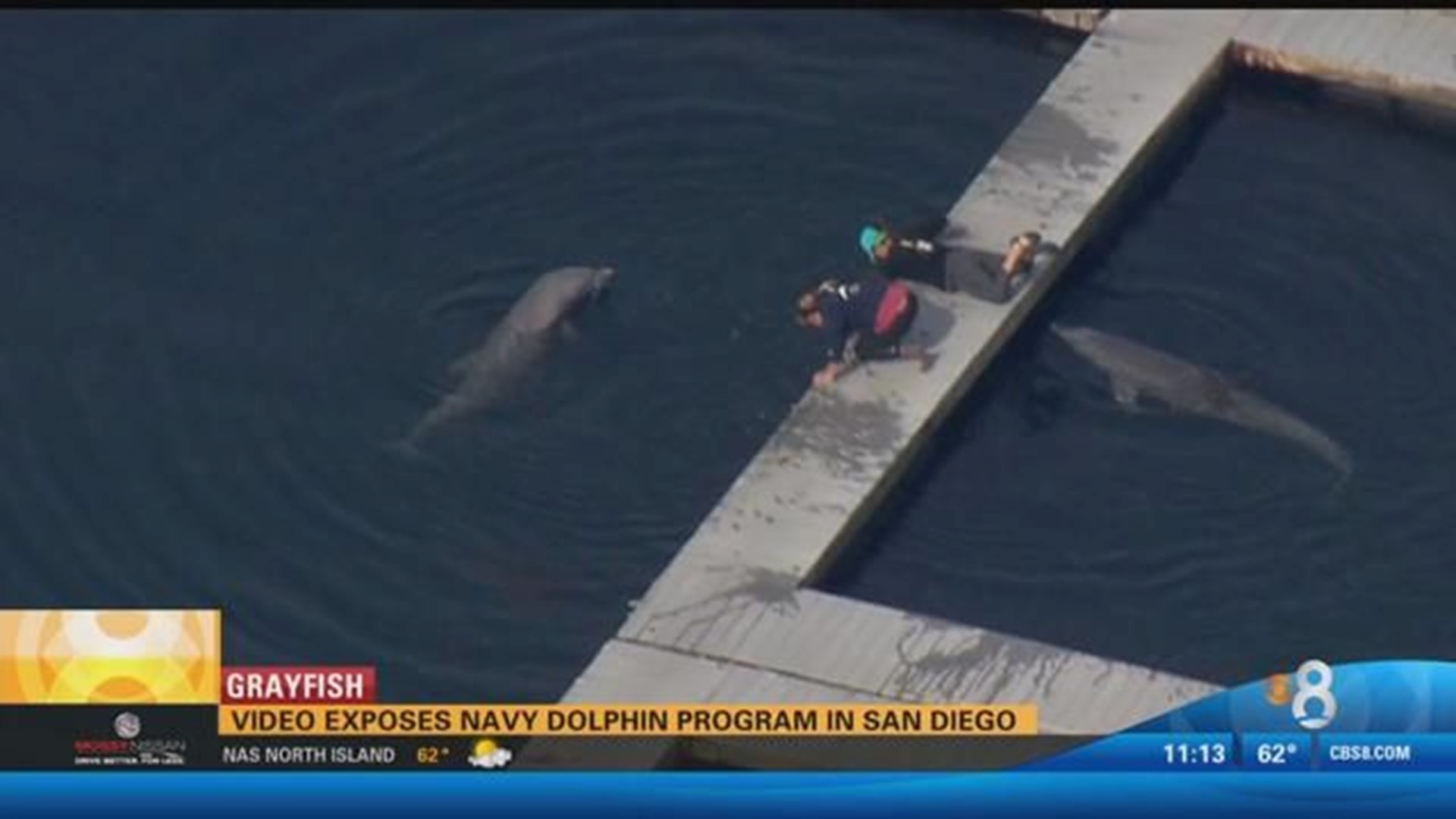
Criticism of the Marine Mammal Program has never fully subsided.
Marine biologists and animal welfare advocates have raised concerns about:
• Captivity of highly intelligent animals
• Use of dolphins and sea lions in military contexts
• The stress of deployment and transport
Even within the scientific community, views are mixed.
As one researcher noted, there is recognition of the program’s scientific value and animal care—but also discomfort, even opposition, to the idea of using marine mammals in military service.
The Navy, for its part, emphasizes that:
• Animals receive “the highest quality care” under strict oversight
• Veterinary teams and trainers monitor them continuously
• Participation in training tasks is reinforcement-based, not coercive
The program has also contributed significantly to marine science, producing hundreds of peer-reviewed studies on dolphin physiology, sonar, and health.
Still, the ethical tension remains unresolved.
It is not easily dismissed.
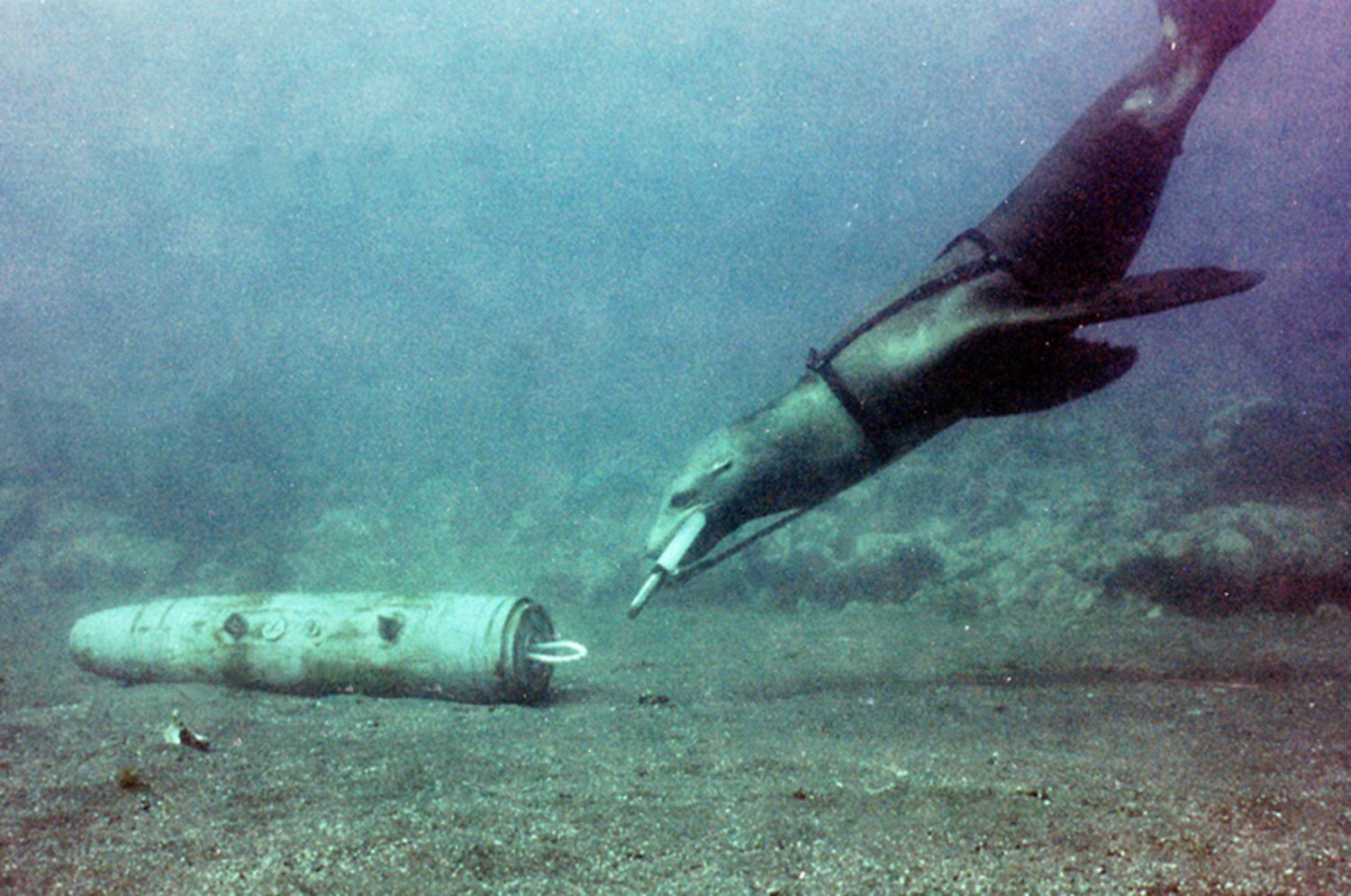
SEA LIONS: THE OTHER HALF OF THE PROGRAM
While dolphins detect mines, California sea lions serve a different role.
They are used primarily to:
• Locate and recover underwater objects
• Attach lines to equipment or training mines
• Detect unauthorized swimmers near ships and harbors
Sea lions rely on vision and directional hearing rather than sonar, making them effective in different conditions.
Together, dolphins and sea lions form a complementary system—part biological, part operational.
IRAN, MINES, AND THE QUESTION OF DEPLOYMENT
Iran’s naval strategy has long emphasized asymmetric warfare, including the use of mines deployed by small boats, fishing vessels, or coastal installations.
These mines are:
• Cheap
• Difficult to detect
• Capable of disrupting global shipping with minimal use
In such an environment, the Navy’s marine mammals could play a role—particularly in:
• Clearing harbor approaches
• Verifying safe channels
• Detecting buried or difficult-to-find mines
But their role would be limited.
Dolphins work methodically, not at scale.
They clear areas, not entire waterways.
They are precise tools, not strategic solutions.
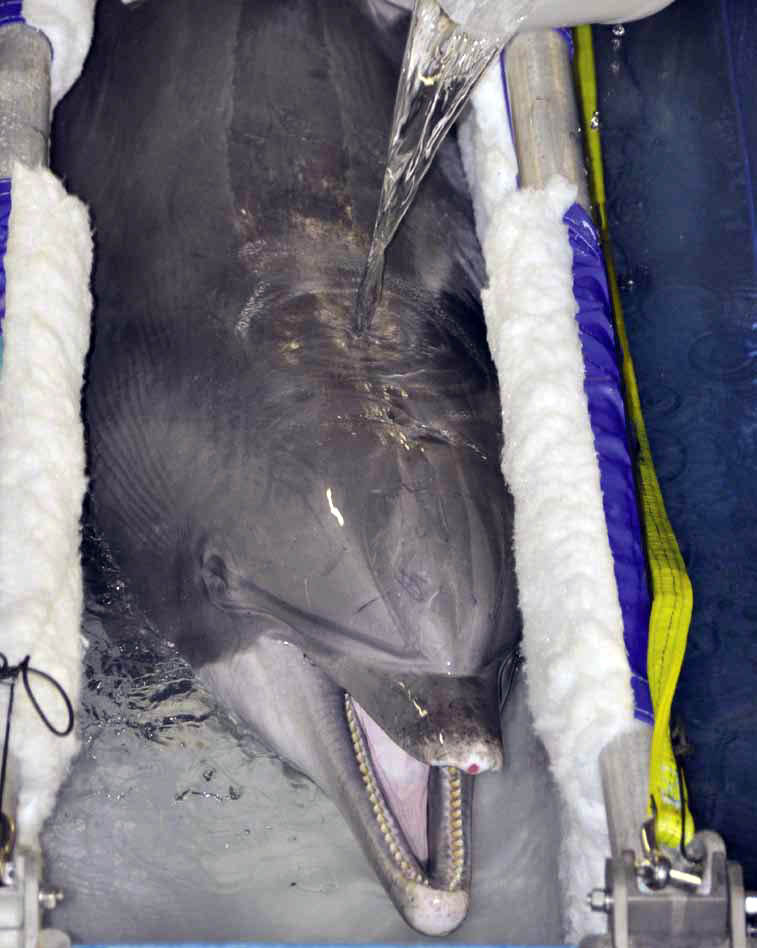

A CAPABILITY THAT ENDURES — FOR NOW
For decades, the Navy has tried to replace dolphins and sea lions with machines.
Unmanned underwater vehicles, advanced sonar systems, and autonomous sweep platforms have all been developed with that goal in mind.
Some are promising.
None have fully replaced the animals.
Even today, the Marine Mammal Program remains operational, with roughly a hundred animals trained for deployment worldwide.
They can be transported by aircraft or ship and deployed within days.
That reality leads to an uncomfortable but unavoidable conclusion:
In a future conflict involving mine warfare in the Strait of Hormuz, the United States might once again rely—at least in part—on dolphins.
THE LARGER QUESTION
The existence of the program raises two parallel questions.
The first is practical:
Can the United States clear mines quickly enough, with the tools it has, to keep the Strait open?
The second is more complex:
Should it still be relying on animals to do so?
The answer to the first remains uncertain.
The answer to the second depends, in part, on whether technology can finally replace a capability that nature perfected long ago.
Until then, somewhere off a naval base in San Diego, a dolphin waits for a signal—ready to do a job no machine has yet mastered.