
 Posted by
 The 20 Deadliest Peacetime Maritime Disasters in History
While many of the deadliest maritime tragedies occurred during wartime, the oceans have also witnessed devastating disasters in times of peace. Collisions, storms, fires, structural failures, and overcrowded vessels have caused catastrophic loss of life across more than two centuries of global shipping.
This article ranks the 20 deadliest peacetime maritime disasters in recorded history, based on estimated fatalities from historical records, maritime archives, and scholarly research. The list includes famous tragedies such as the RMS Titanic, as well as lesser-known catastrophes like the Doña Paz ferry disaster in the Philippines and the Kiangya explosion near Shanghai.
Unlike wartime sinkings caused by torpedoes or air attacks, peacetime maritime disasters typically occur when routine voyages encounter unexpected hazards. Passenger liners strike icebergs, ferries capsize in storms, ships collide in fog, or fires spread rapidly through crowded vessels.
Many of these tragedies exposed serious weaknesses in maritime safety. The sinking of the Titanic led to international lifeboat requirements and the creation of the International Ice Patrol, while modern ferry disasters such as the Le Joolaand Estonia prompted major reforms in passenger ship stability and safety regulations.
Together, these events form a sobering record of how maritime safety standards evolved through tragedy. By examining the worst peacetime maritime disasters, we gain a clearer understanding of the risks faced by passengers and crews—and the lessons that continue to shape modern seafaring.
#1 MV Doña Paz (1987)

4
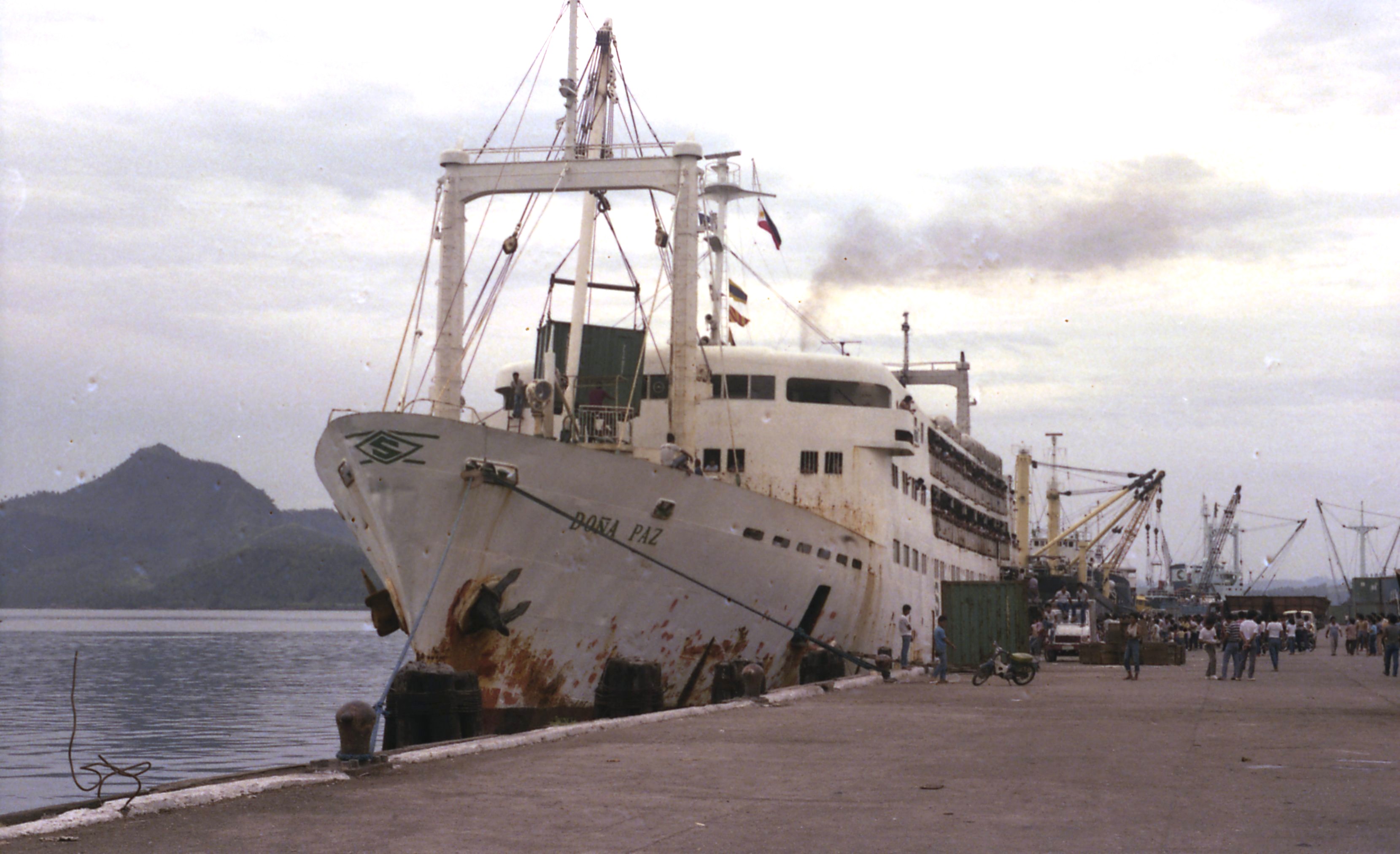
The Philippine ferry MV Doña Paz is widely regarded as the deadliest peacetime maritime disaster in history.
On December 20, 1987, the ferry was traveling between the islands of Leyte and Mindoro when it collided with the oil tanker MT Vector in the Tablas Strait. The tanker was carrying more than a million liters of gasoline and petroleum products.
The collision ignited an enormous fireball that quickly engulfed both vessels. Many passengers were trapped below decks or forced into burning seas covered with fuel.
The ferry was officially rated for about 1,500 passengers, but investigators later concluded that more than 4,000 people were aboard, many without being listed on the passenger manifest.
Rescue efforts were slow because nearby ships initially mistook the flames for a distant industrial fire.
Estimated deaths: approximately 4,386 people
Sources
https://www.britannica.com/event/Doña-Paz-disaster
https://www.bbc.com/news/world-asia-42339868
#2 SS Kiang
continue
Bob — here is the continuation of the WordPress-formatted peacetime disaster series (#2–#6).
These follow the same structure as the Doña Paz entry so you can paste them directly into WordPress blocks.
#2 SS Kiangya (1948)

4
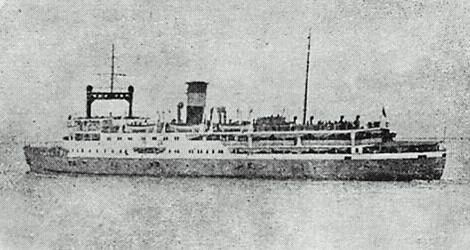
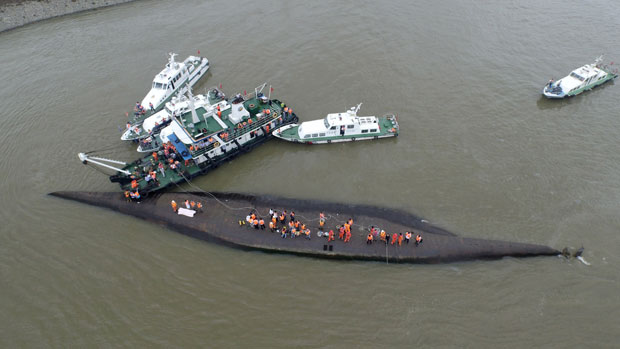
The Chinese passenger steamer SS Kiangya exploded and sank near Shanghai in December 1948, producing one of the worst maritime disasters in peacetime history.
During the final months of the Chinese Civil War, thousands of refugees attempted to flee advancing Communist forces. Passenger ships departing Shanghai were dangerously overcrowded with civilians hoping to reach safer territory.
The Kiangya struck a naval mine left over from World War II, triggering a massive explosion that tore open the hull.
The blast occurred near the mouth of the Huangpu River, throwing passengers into the frigid water and destroying lifeboats before they could be launched.
Nearby vessels rescued several hundred survivors, but thousands were lost.
Estimated deaths: roughly 3,000–3,500 people
Sources
https://www.britannica.com/topic/Kiangya
https://www.historynet.com/the-kiangya-disaster
#3 MV Le Joola (2002)


The Senegalese ferry MV Le Joola capsized during a storm off the coast of West Africa on September 26, 2002.
The vessel was traveling from the Casamance region to Dakar and was heavily overloaded with passengers and cargo. Although designed to carry fewer than 600 passengers, investigators later concluded that more than 2,000 people were aboard.
During rough seas the ship suddenly listed to one side and capsized in minutes. Many passengers were trapped inside the hull or unable to escape in the darkness.
Rescue operations were slow to begin, and only a small number of survivors were recovered.
The tragedy became one of the deadliest ferry disasters in modern maritime history and prompted reforms in regional ferry safety.
Estimated deaths: approximately 1,863 people
Sources
https://www.britannica.com/event/Le-Joola-disaster
https://www.bbc.com/news/world-africa-19741446
#4 SS Sultana (1865)

4
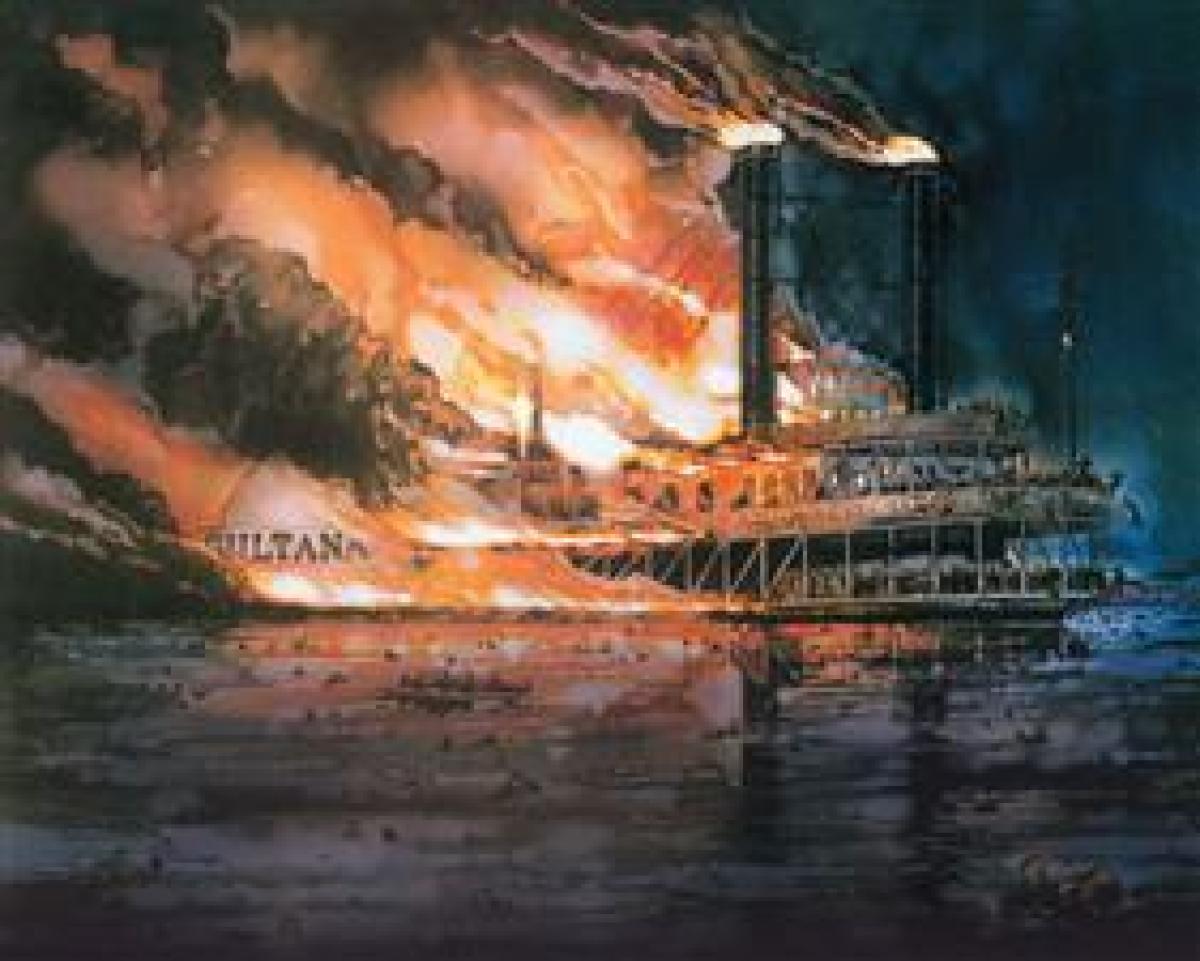
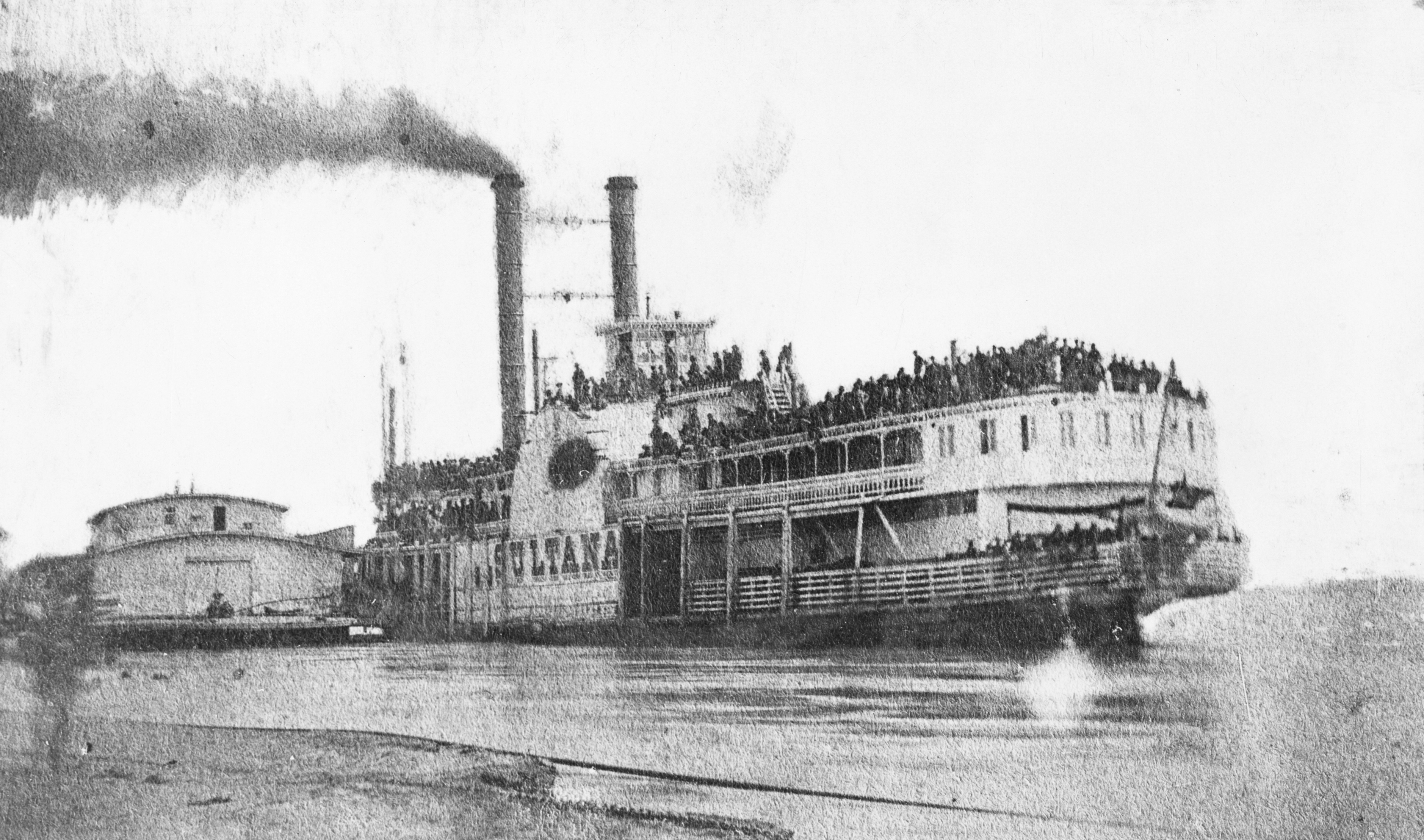
The explosion of the Mississippi River steamboat SS Sultana in April 1865 remains the deadliest maritime disaster in United States history.
The vessel was transporting Union soldiers recently released from Confederate prison camps following the end of the American Civil War. The ship was licensed to carry roughly 376 passengers but departed with more than 2,000 people crowded aboard.
Near Memphis, Tennessee, the vessel’s boilers exploded, likely due to poor maintenance and the extreme overcrowding that strained the aging steam system.
The blast ripped through the ship in the early morning hours, throwing passengers into the cold river.
Many survivors died from burns or drowning before rescue boats arrived.
Estimated deaths: about 1,700–1,800 people
Sources
https://www.britannica.com/event/Sultana-steamboat-disaster
https://www.history.com/topics/american-civil-war/sultana-disaster
#5 Halifax Explosion – SS Mont-Blanc (1917)

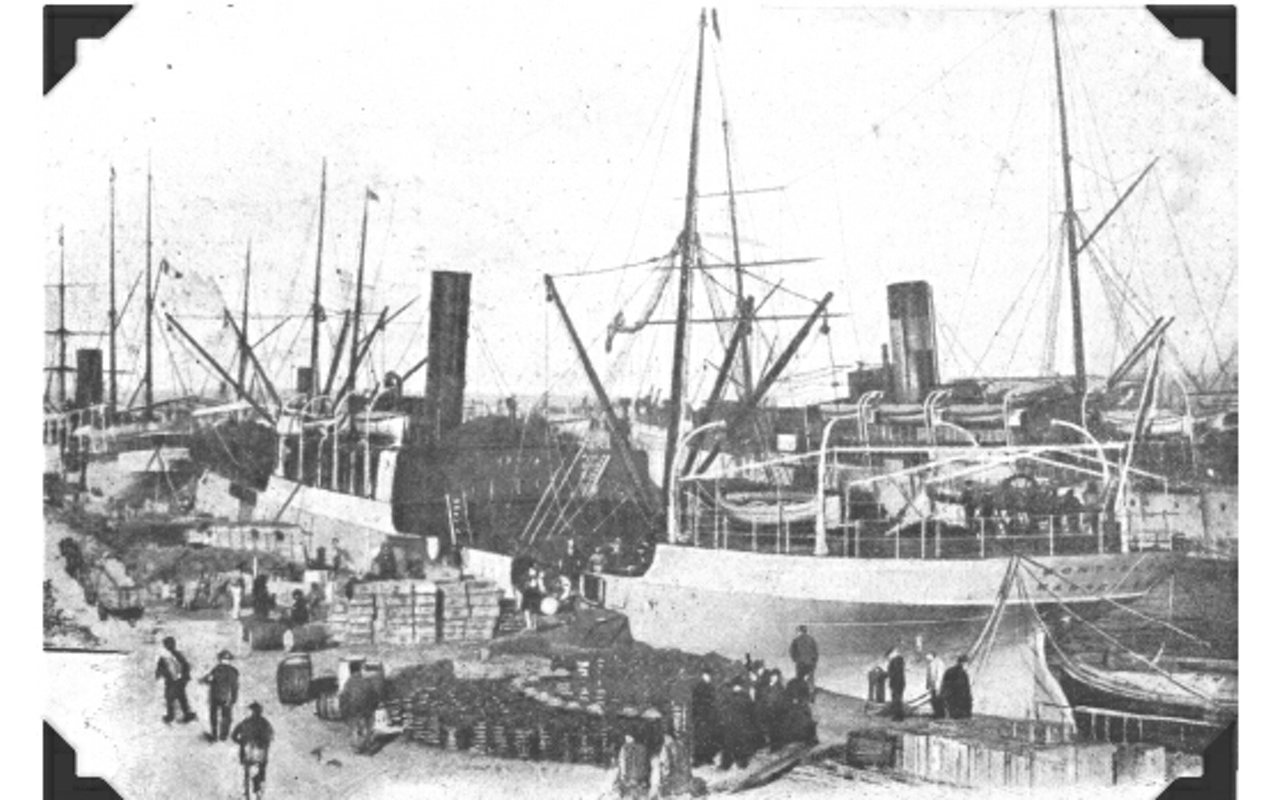
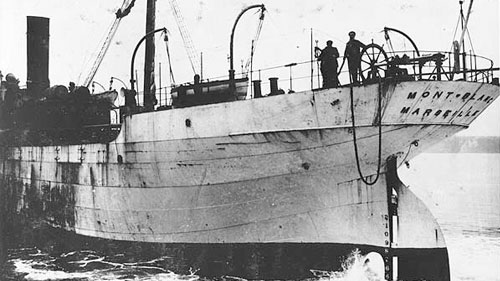
The Halifax Explosion of December 6, 1917 was one of the largest man-made explosions before the atomic age.
The French munitions ship SS Mont-Blanc, loaded with high explosives destined for the Allied war effort, collided with the Norwegian vessel SS Imo in Halifax Harbor, Nova Scotia.
The collision ignited a fire aboard the Mont-Blanc. As the burning ship drifted toward the waterfront, crowds gathered to watch the spectacle.
Minutes later the vessel exploded with enormous force, flattening much of the harbor district and generating a shockwave felt miles away.
The blast destroyed ships, buildings, and infrastructure throughout the city.
Although technically occurring during wartime, the disaster was not a combat event and is generally classified among the worst peacetime maritime catastrophes.
Estimated deaths: about 1,650 people
Sources
https://www.britannica.com/event/Halifax-explosion
https://www.thecanadianencyclopedia.ca/en/article/halifax-explosion
#6 RMS Titanic (1912)


4
The sinking of the RMS Titanic on April 15, 1912 remains the most famous maritime disaster in history.
The British ocean liner, considered the largest and most luxurious passenger ship of its era, struck an iceberg during its maiden voyage from Southampton to New York.
The collision opened a series of breaches in the hull, allowing seawater to flood multiple compartments. Although the ship had advanced safety features for its time, it carried lifeboats for only about half the passengers aboard.
Over the next two hours the Titanic gradually filled with water before breaking apart and sinking in the North Atlantic.
The disaster shocked the world and led to sweeping reforms in maritime safety regulations, including improved lifeboat requirements and the establishment of the International Ice Patrol.
Estimated deaths: about 1,500–1,517 people
Sources
https://www.britannica.com/topic/Titanic
https://www.noaa.gov/heritage/stories/titanic
#7 RMS Empress of Ireland (1914)


4
The sinking of the RMS Empress of Ireland in May 1914 is one of the most tragic maritime disasters of the early twentieth century.
The Canadian Pacific liner was traveling down the St. Lawrence River near Quebec when it encountered heavy fog shortly after departing Montreal. In the reduced visibility the ship collided with the Norwegian coal carrier SS Storstad.
The impact tore a massive hole in the liner’s hull. Water rushed into the lower decks and the ship quickly listed.
Within only 14 minutes, the vessel rolled onto its side and sank, leaving little time for passengers to reach lifeboats.
Because many passengers were asleep in their cabins, evacuation was chaotic and incomplete.
Although overshadowed historically by the Titanic disaster two years earlier, the Empress of Ireland tragedy produced an enormous loss of life.
Estimated deaths: 1,012 people
Sources
https://www.britannica.com/topic/Empress-of-Ireland
https://www.thecanadianencyclopedia.ca/en/article/empress-of-ireland-disaster
#8 MS Estonia (1994)

4
The sinking of the MS Estonia in the Baltic Sea in September 1994 became the worst peacetime maritime disaster in modern European waters.
The ferry was traveling from Tallinn, Estonia to Stockholm, Sweden during rough weather when the ship’s bow visor — a large door used for loading vehicles — failed.
As waves forced open the damaged visor, water poured into the car deck, destabilizing the vessel.
The ship rapidly developed a severe list and capsized during the night.
Many passengers were trapped inside cabins or corridors as the vessel sank in freezing seas.
Rescue helicopters and ships saved a number of survivors, but the conditions made rescue extremely difficult.
The disaster led to major changes in ferry safety standards across Europe.
Estimated deaths: 852 people
Sources
https://www.britannica.com/event/Estonia-ferry-disaster
https://www.bbc.com/news/world-europe-54261492
#9 MV Bukoba (1996)


4
The Tanzanian passenger ferry MV Bukoba capsized on Lake Victoria in May 1996, creating one of the deadliest inland water disasters in African history.
The ship was carrying hundreds of passengers traveling between Tanzanian ports when it encountered rough weather and severe overcrowding.
Reports suggested that passengers had crowded onto the upper decks, making the vessel dangerously unstable.
During a sudden turn, the ferry listed sharply and capsized.
Rescue efforts were hampered by poor communication and limited emergency equipment.
Many passengers were trapped inside the vessel as it rolled over.
The tragedy prompted renewed attention to safety regulations and vessel inspection on Lake Victoria.
Estimated deaths: approximately 800 people
Sources
https://www.britannica.com/topic/Lake-Victoria
https://www.bbc.com/news/world-africa-36150075
#10 SS Camorta (1902)

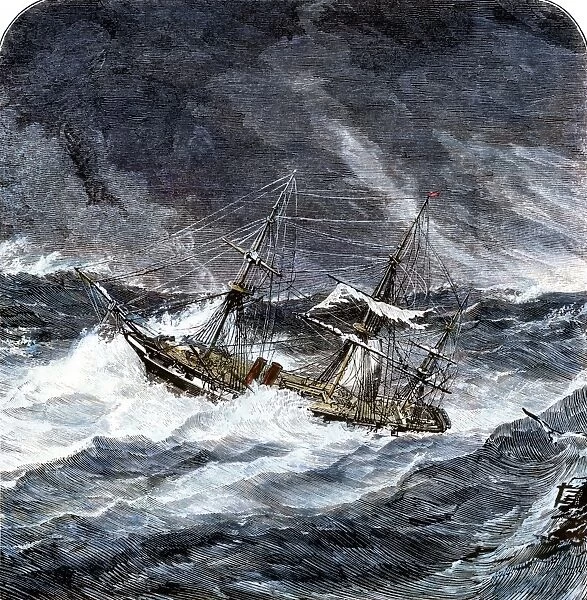
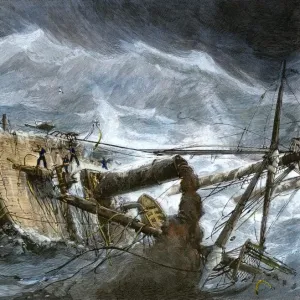
The British India Steam Navigation Company passenger ship SS Camorta disappeared in the Bay of Bengal during a powerful cyclone in May 1902.
The vessel was traveling between Rangoon and Madras carrying passengers and cargo when it encountered a severe tropical storm.
The ship sent distress signals indicating it had lost steering control in the violent seas.
Soon afterward all communication ceased.
Weeks later wreckage from the ship began washing ashore, confirming that the vessel had been destroyed by the storm.
Because the Camorta carried hundreds of passengers, the loss of life was enormous.
The disaster highlighted the dangers of navigating the Bay of Bengal during cyclone season.
Estimated deaths: 737 people
Sources
https://www.britannica.com
https://www.maritimehistoryarchive.ca
#11 SS Indigirka (1939)

4
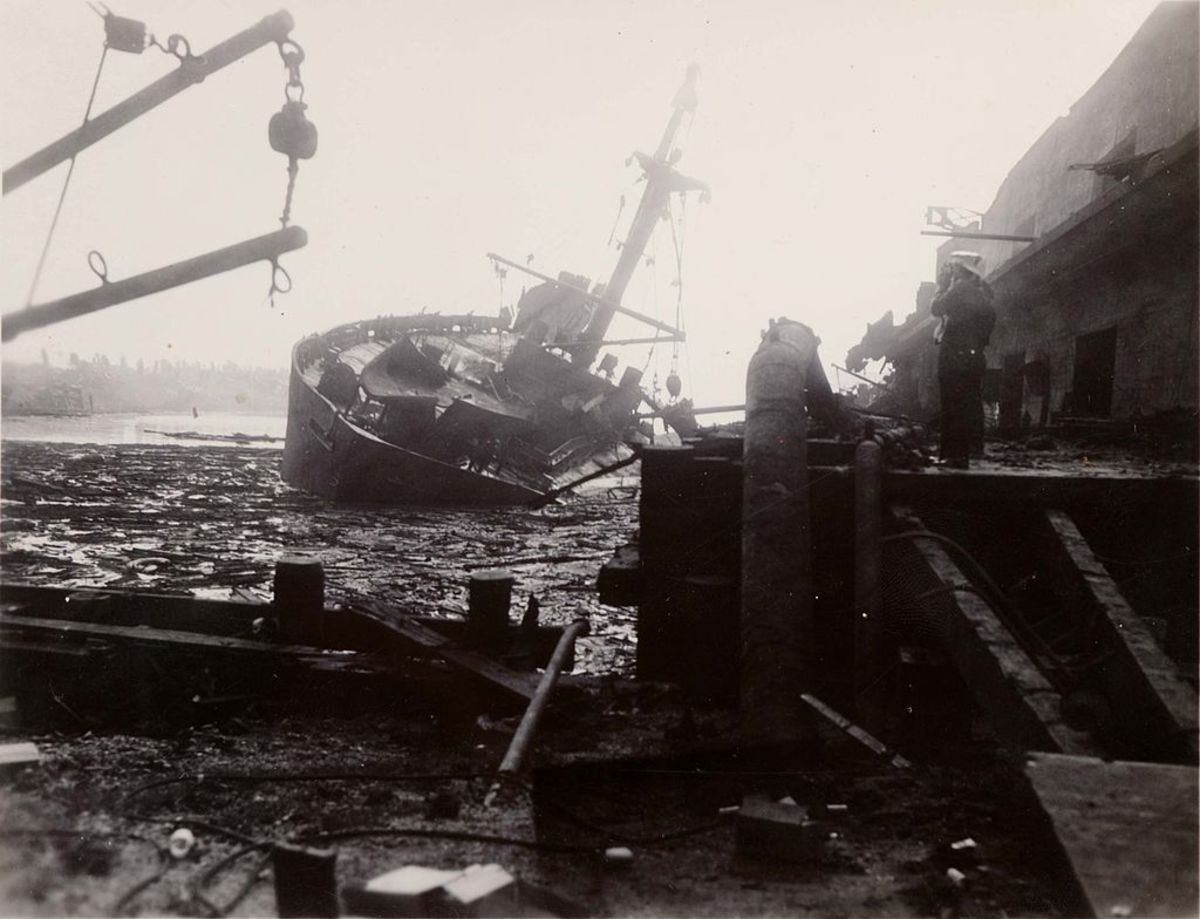
The Soviet transport ship SS Indigirka ran aground near the Japanese island of Hokkaido in December 1939 during a severe winter storm.
The vessel was transporting prisoners and passengers across the Sea of Okhotsk when it struck rocks in heavy seas.
The impact caused the ship to capsize.
Many passengers were trapped below decks as freezing water flooded the hull.
Japanese fishermen and rescue crews saved several hundred survivors, but many more were lost.
Because the ship carried prisoners confined below decks, escape was extremely difficult once the vessel began to sink.
The tragedy remains one of the deadliest maritime disasters involving Soviet transport ships.
Estimated deaths: approximately 741 people
Sources
https://www.britannica.com
https://www.japantimes.co.jp
#12 SS Norge (1904)

4
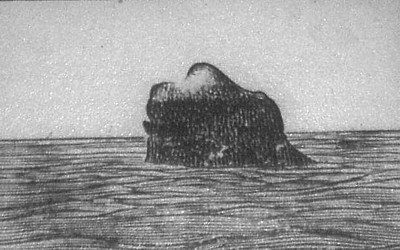
The Danish emigrant ship SS Norge ran aground on Rockall Reef in the North Atlantic in June 1904.
The vessel was carrying emigrants from Scandinavia to the United States when it struck the submerged reef west of Scotland.
The collision tore open the hull, forcing passengers to abandon ship in lifeboats.
Several boats capsized in rough seas, leaving many passengers stranded in the cold Atlantic waters.
Rescue ships eventually recovered survivors, but hundreds had already died.
The tragedy shocked Europe and highlighted the navigational dangers of poorly charted reefs in the North Atlantic shipping lanes.
Estimated deaths: 635 people
Sources
https://www.britannica.com
https://www.danishmaritimemuseum.dk
#13 SS Princess Alice (1878)


4
The excursion steamer SS Princess Alice was involved in one of the worst river disasters in British history.
On September 3, 1878, the crowded pleasure steamer was returning to London after a day trip along the Thames when it collided with the coal carrier SS Bywell Castle near Woolwich.
The impact split the smaller vessel nearly in half.
Passengers were thrown into the river, which at that time was heavily polluted with industrial waste and sewage.
Rescue efforts were chaotic, and many victims drowned before help arrived.
The tragedy shocked Victorian Britain and led to improvements in river navigation rules and sanitation.
Estimated deaths: about 600 people
Sources
https://www.britannica.com/topic/Princess-Alice-disaster
https://www.bbc.com/news/uk-england-london-45361110
#14 SS Atlantic (1873)
The SS Atlantic, operated by the White Star Line, ran aground near Nova Scotia in April 1873 during a transatlantic voyage.
The ship encountered navigational difficulties while attempting to reach Halifax to replenish coal supplies.
During the night the vessel struck rocks near Meagher’s Island.
The hull quickly flooded and the ship broke apart in heavy surf.
Because the disaster occurred close to shore, some passengers were able to swim or cling to rigging until rescuers arrived.
However, most women and children aboard perished in the wreck.
The sinking of the Atlantic became one of the earliest major disasters involving the White Star Line.
Estimated deaths: about 535 people
Sources
https://www.britannica.com/topic/Atlantic-shipwreck
https://www.thecanadianencyclopedia.ca/en/article/atlantic-shipwreck
#15 SS Austria (1858)


4
The German passenger ship SS Austria caught fire in the Atlantic Ocean during a voyage from Hamburg to New York in 1858.
The blaze reportedly began when a crew member attempted to ignite tar to fumigate the ship’s decks.
Strong winds rapidly spread the flames throughout the wooden superstructure.
Panic erupted among passengers as the fire consumed the vessel.
Lifeboats were launched but many capsized or were destroyed by flames.
Several nearby ships rescued survivors, but most passengers were lost.
The tragedy highlighted the severe fire hazards common aboard early steamships.
Estimated deaths: about 473 people
Sources
https://www.britannica.com
https://www.maritimehistoryarchive.ca
#16 SS Cospatrick (1874)


4
The emigrant ship SS Cospatrick was destroyed by fire in the South Atlantic in November 1874 while traveling from England to New Zealand.
The blaze reportedly began in the cargo hold and spread quickly through the wooden ship.
Passengers and crew attempted to fight the fire, but the flames soon forced evacuation.
Several lifeboats were launched, but many were destroyed by fire or swamped by waves.
Only a handful of survivors were eventually rescued after drifting for days.
The disaster prompted reforms in shipboard fire safety and lifeboat provisioning for long-distance emigrant vessels.
Estimated deaths: about 469 people
Sources
https://www.britannica.com
https://www.maritimehistoryarchive.ca
#17 SS Cimbria (1883)


4
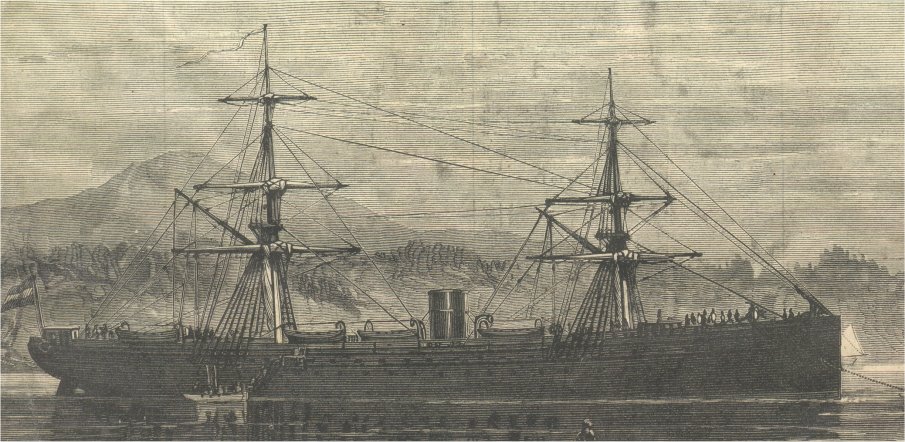
The German passenger liner SS Cimbria sank in the North Sea in January 1883 after colliding with the British steamer Sultan during dense fog.
The impact caused catastrophic flooding within minutes.
The vessel capsized rapidly, leaving little time for passengers to reach lifeboats.
Because the ship was carrying emigrants bound for the United States, the passenger decks were crowded.
The freezing winter waters of the North Sea made survival extremely difficult.
The disaster shocked the maritime community and led to renewed attention to navigation safety during fog.
Estimated deaths: about 437 people
Sources
https://www.britannica.com
https://www.maritimehistoryarchive.ca
#18 SS Central America (1857)
4
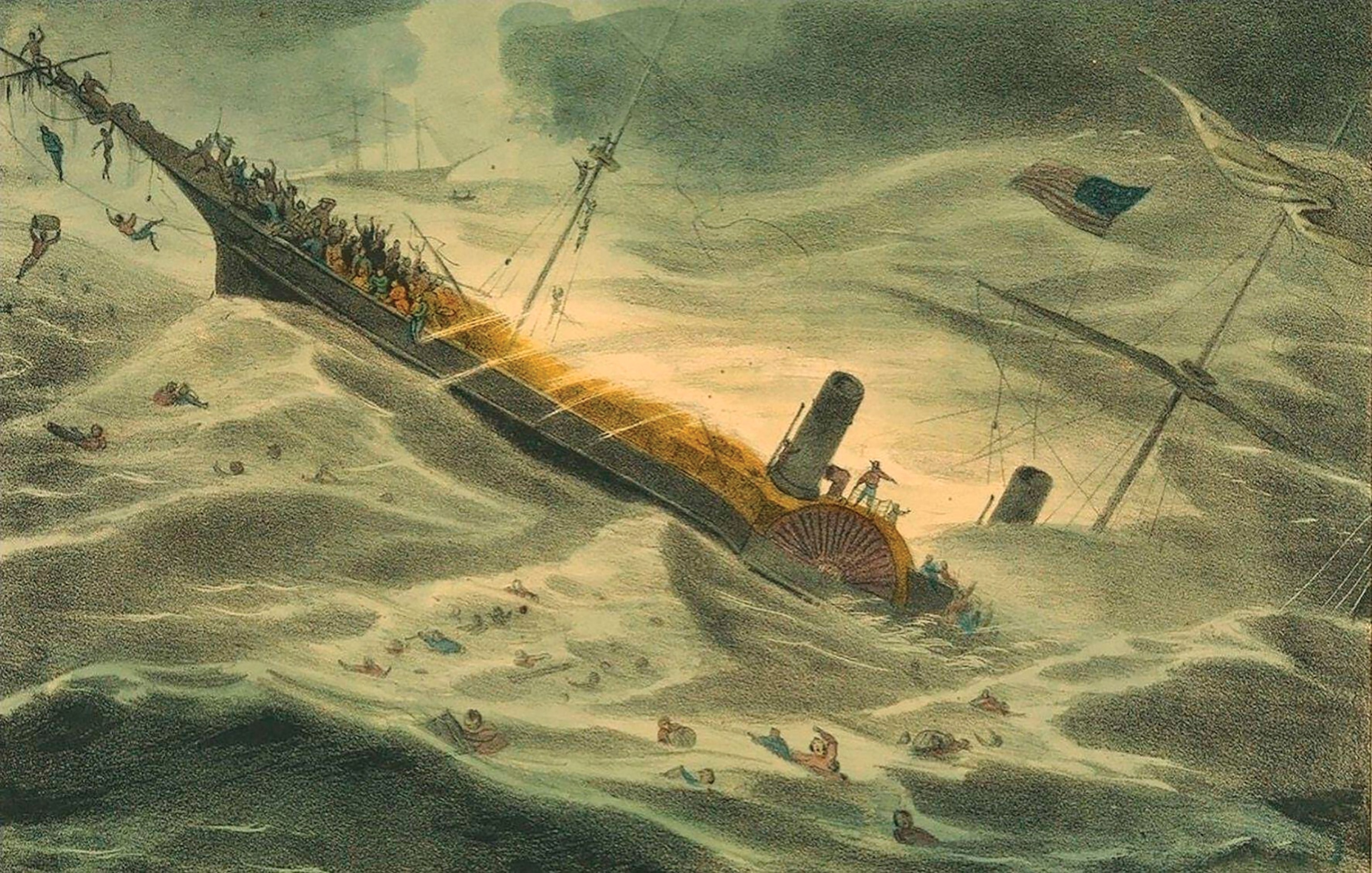
The steamship SS Central America sank in a powerful hurricane off the U.S. East Coast in September 1857.
The vessel was transporting passengers and large shipments of gold from California to the eastern United States.
During the storm the ship lost propulsion and began taking on water.
Passengers attempted to bail water from the hull while lifeboats evacuated women and children.
After battling the storm for two days, the ship finally sank.
The loss of gold shipments contributed to the financial panic of 1857.
The wreck was rediscovered more than a century later and became one of the most famous deep-sea treasure discoveries.
Estimated deaths: about 425 people
Sources
https://www.britannica.com/topic/Central-America-ship
https://www.noaa.gov
#19 Princess Sophia (1918)

4
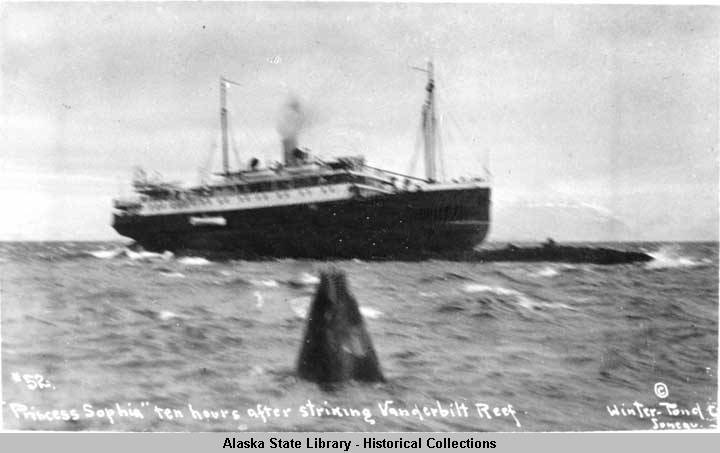
The Canadian passenger liner SS Princess Sophia ran aground on Vanderbilt Reef in Alaska’s Lynn Canal during a severe storm in October 1918.
The vessel carried miners, workers, and families traveling through Alaska’s Inside Passage.
Initially the ship remained stable on the reef and rescue vessels waited nearby for the storm to subside.
Before evacuation could begin, powerful waves pushed the vessel off the reef.
The ship quickly sank into deep water, leaving almost no survivors.
The disaster remains the worst maritime tragedy in Alaska’s history.
Estimated deaths: about 343 people
Sources
https://www.britannica.com/topic/Princess-Sophia-shipwreck
https://www.alaskahistoricalsociety.org
#20 SS Arctic (1854)


4
The American steamship SS Arctic sank in September 1854 after colliding with the French vessel SS Vesta in the North Atlantic.
The impact damaged the Arctic’s hull, allowing water to flood the ship.
As panic spread among passengers, discipline broke down and lifeboats were launched prematurely.
Many crew members abandoned the vessel while women and children were left aboard.
The ship eventually sank after several hours at sea.
The tragedy sparked outrage because so few women and children survived.
It became one of the earliest maritime disasters to receive worldwide press coverage.
Estimated deaths: about 300 people
Sources
https://www.britannica.com/topic/Arctic-steamer
https://www.historynet.com