

(Editor’s note: Author Robert Frump is a nationally recognized maritime writer and journalist who has reported at length on maritime affairs and naval shipbuilding. He is the former Managing Editor of The Journal of Commerce, a Knight-Ridder newspaper focused on world trade and transportation.)
By Robert Frump
It is a truth universally acknowledged, that a country in possession of the Straits of Hormuz, must be in want of a good minesweeper.
Many minesweepers would be better.
Yet in the run-up to the confrontation with Iran, the United States command appears to have erred tactically and strategically so that America, just when the country needs minesweepers as a critical military deterrent, has limited and uncertain forward-deployed counter-mine warfare capability in the Straits of Hormuz.
The result is that the US projection of force, with all its military brilliance, lacks a basic, fundamental capability of waging war against one of the most ancient and least expensive weapons: the sea mine.


A Strategic Blind Spot in Plain Sight
As a result, Iran may be able to functionally “close the Straits” for weeks and months, all the while ratcheting up world prices and pressures to settle the war more favorable to terms of the fundamentalist Republic of Iran and its radical Islamic Revolutionary Guard
Systems That Have Yet to Prove Themselves
The waters of the Straits are murky and silted. The challenges faced by US minesweeping systems there are clear and starkly defined.
· One key system called the Airborne Mine Neutralization System, “… cannot neutralize most of the mines in the Navy’s threat scenarios” says one defense department report, in earlier testing that has not been clearly shown in public reporting to be fully resolved.
· Another key system called the Unmanned Influence Sweep System, was deemed “not operationally suitable,” with availability of just 29 percent—well below the Navy’s required minimum threshold for sustained operations.
· The LCS ship class at the heart of the anti-mine system according to the Government Accountability Office “has not demonstrated the operational capabilities it needs to perform its mission.”¹


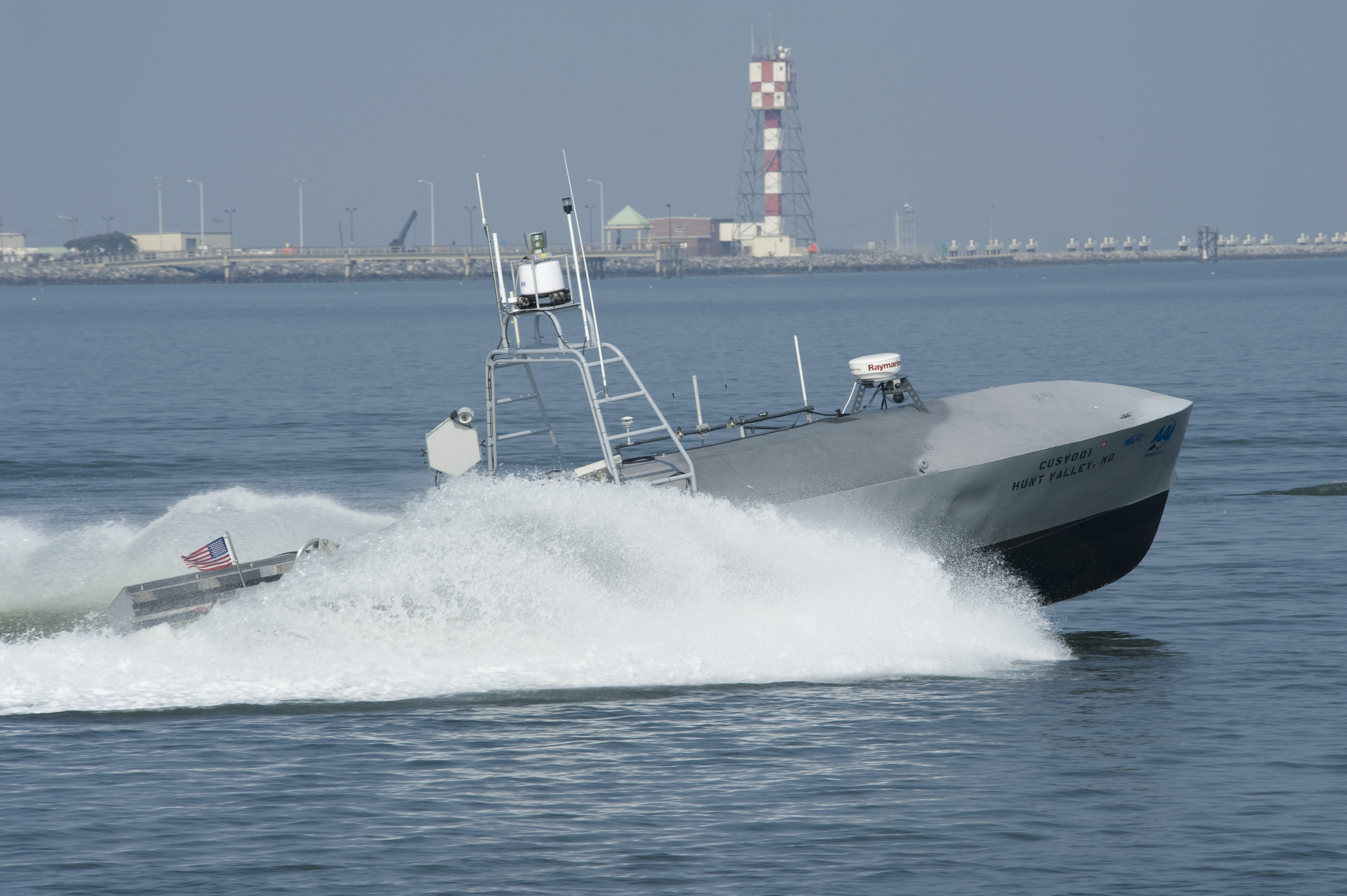


The Navy’s replacement mine-warfare concept relies on Littoral Combat Ships deploying unmanned systems and sensors.
The Promise—and Risk—of a New Mine Warfare Doctrine
The Navy’s replacement mine-warfare concept relies on Littoral Combat Ships deploying unmanned systems and sensors.
The current state of affairs started out as best intentions carrying the banner of progress and one day, the Navy may perfect its new mine warfare approach.
After all, many proven systems –– GPS, the Aegis Combat System and Predator drones – got off to a shaky start but after years of trial and controversy, stuck the landing.
The difference is the new systems may undergo trial literally by combat in a crucial role in one of America’s most critical conflicts in decades.
There is no fallback plan to old technology.
The Retirement of Proven Capability
The American command in September as part of a broader planned transition decommissioned its fleet of ancient but battle-proven old wooden-hulled vessels – legendary little ships that helped rescue two Navy multi-million combat ships in 1991 conflicts off Iraq.
The intent? Replace the odd-duck wooden ships with state-of-the-art “mine module” Littoral Combat Ships (LCS).


The retired Avenger-class ships were small, specialized minesweepers built to operate directly in mined waters.
Execution Breakdowns: Distance, Readiness, and Delay
But there is many a slip between cup and lip. And here, for the Navy and Defense Department there have been quite as many drips as sips.
The tactical implementation of new systems for old systems has been plagued with cascading logistic and technical glitches.
Some seem simple foreseeable matters of logistics.
Many of the new ships and the new systems are many days away from fully deploying. Some are under repair and not ready for deployment. Only one – the USS Canberra — according to recent reporting at certain points in late March was reported near the theatre of operations. She is last reported in the Indian Ocean.
And even when the new ships are fully deployed, both the systems and the ships have not yet demonstrated reliability sufficient for sustained operations under real-world conditions.
A System of Systems—With Many Points of Failure
The Government Accountability Office has concluded that the LCS fleet “has not demonstrated the operational capabilities it needs to perform its mission.”¹
The same view emerges from Pentagon testing officials and some experienced naval officers.
The concern centers on the Littoral Combat Ship equipped with the mine countermeasures (MCM) mission package. The transition from Avenger wood-hulled minesweepers to LCS’s marked a fundamental shift: from dedicated minesweepers to a distributed, technology-driven system built around unmanned vehicles, airborne sensors, and remote neutralization tools.
What the Navy Gave Up
The retired Avenger-class ships were small, specialized minesweepers built to operate directly in mined waters.
Avengers plowed through the water with side-scanning sonar to locate and detonate mines. They played crucial roles in the two US expeditions into Iraq. When two US fighting ships ran into mines in 1991, an Avenger cleared a path to lead the wounded ships to safety.
But inevitably, they were bound for the breaking yards. Most were built back in the 1980’s and were well past their useful prime. The old ships were slipping as well as their systems.
The new vision was simple and modern. The new LCS vessels could be fitted with specialized weapon modules. Need more missiles? Bolt on the missile module. Need more minesweepers, bolt on the anti-mine module.
But the mine module system proved a very complex project and over years of effort, the Navy discovered the swap-out, plug n’ play concept did not work well.
To work right, the LCS mine ship needed to coordinate remote sea drones, air drones, sensors, sonar and helicopters in a seamless scan that would result in identification of mines and their destruction. It’s taken more than ten years to create a reasonable real-world system.
But the system has not yet demonstrated it can perform as intended.
Testing Without Proof of Performance
According to the Director, Operational Test and Evaluation (DOT&E) fiscal 2025 annual report, the Pentagon could not determine whether the Independence-variant LCS with its mine warfare package is operationally effective or suitable.
The reason: insufficient data from real-world use.
“The Navy has not provided sufficient data from operational employment… to determine operational effectiveness” according to the DOT&E
A Critical System with a 29% Availability Rate
The finding applies specifically to key airborne systems deployed from the LCS, including:
· Airborne Mine Neutralization System (AMNS)
· Airborne Laser Mine Detection System (ALMDS)
These systems, operated from MH-60S helicopters, are central to the Navy’s new approach—detecting, classifying, and destroying mines using lasers, sonar, and unmanned vehicles.
Yet their performance record remains incomplete. A 2016 defense department report stated flatly, “… cannot neutralize most of the mines in the Navy’s threat scenarios.”
The Unmanned Influence Sweep System, another core component of the LCS mine package, was deemed “not operationally suitable,” with availability of just 29 percent—well below the Navy’s required minimum and insufficient for sustained operations.


Sea mines remain one of the cheapest and most disruptive weapons in maritime warfare.
Doubt from Within the Mine Warfare Community
Concerns about these systems are not new.
DOT&E reporting indicates that both AMNS and ALMDS demonstrated low reliability prior to fleet release, raising early questions about whether they could sustain real-world operations.
That limitation strikes at the core of the mission. Detection without reliable neutralization leaves a channel effectively uncleared.
UISS: A System That Struggles to Stay Operational
One of the most concrete performance metrics comes from another key component of the LCS mine warfare package: the Unmanned Influence Sweep System (UISS).
This system uses an unmanned surface vessel to simulate ship signatures—acoustic and electromagnetic—in order to trigger mines safely from a distance.
According to DOT&E:
· Operational availability was 29%.
· A 2022 report states directly: “UISS remains not operationally suitable”
· This was “well below the Navy-defined minimum threshold”
· The system did “not support sustained mine sweeping operations”
This is not a marginal shortfall. It suggests a system that is unavailable more often than it is operational. This is particularly important in mine warfare, where repeated, continuous sweeps are required to ensure safe passage.
A More Fragile Approach to a Brutal Problem
Regardless, in May 2023, the Navy declared its Littoral Combat Ship mine-countermeasures package ready for operational use, saying it could conduct the full spectrum of mine-hunting and mine-clearing missions.
Later Pentagon testing reports have been unable to confirm that the system is operationally effective, raising questions about whether that readiness declaration has translated into real-world capability.
Moreover, skepticism has come from within the ranks of those expert in minesweeping. The Navy Times talked to retired Navy captains who served on minesweepers—and with defense analysts familiar with mine warfare. All have expressed skepticism that the LCS-based system matches the capability it replaced.
Their concern is not simply that the new system is different. It is that it may be less effective.
The Avenger-class ships, though aging, were purpose-built for mine warfare. They had wooden hulls and aluminum non-magnetic propulsion systems. They could enter minefields directly, operating with low magnetic and acoustic signatures, and conduct sweeping operations with proven equipment.
The LCS system, by contrast:
· Operates largely from standoff distances
· Relies on multiple interconnected technologies
· Depends on data integration across platforms
· Has limited survivability in higher-threat environments
Each of those elements introduces potential points of failure.
Unproven Assumptions at the Core of the Strategy
Those are some of the tactical challenges.
But the transition away from Avenger-class minesweepers to LCS-based mine warfare systems also represents a significant strategic shift.
It assumes that:
· Unmanned systems can replace direct-contact sweeping
· Distributed sensing can outperform traditional methods
· Technology can reduce risk while maintaining effectiveness
But those assumptions remain only partially tested.
The Operational Test That Matters
In a region like the Persian Gulf—where naval mines have historically been used and remain a credible threat—the question is not theoretical.
It is operational.
Can the system:
· Detect mines reliably?
· Classify them accurately?
· Neutralize them consistently?
· Do so at scale, under pressure?
So far, the answer, according to the Pentagon’s own testing office, is not yet clear. The effectiveness will only be known when the new systems are deployed – at a world class critical time where shippers and insurers are counting on world class competence and assurance the Straits are safe and open.
The Ship Itself: A Troubled Platform
Even when they arrive, another problem with the LCS’s is that they are, well, LCS’s, a troubled ship with a troubled design and a troubled history.
LCS is an abbreviation for Littoral Combat Ship – a sub-destroyer-sized vessel designed for shallow water warfare in “littoral” or coastal areas. But the nickname given the LCS sometimes by some sailors perhaps captures their reputation better: Little Crappy Ship.
The design of the ships has been so questionable LCS construction has been curtailed and the program reduced, and the LCS project is often cited as a case study of how visionary naval projects can go very wrong.
The vessels today are seen as too lightly armored to sustain missile or drone attacks, and the “modular component” theory has taken years to implement. The ships may even set too low in the water with heavy mine-module loads.
Moreover the Government Accountability Office has concluded that the ships have not demonstrated required operational capabilities, noting challenges in survivability, mission systems, and development timelines.
What Happens If the Strait Is Mined
With or without allied help, US minesweeping capabilities are so degraded the Straits could remain functionally closed for weeks, even months, if Iranian asymmetric warfare is sustained.
The Real Weapon: Risk and Perception
Just one mine exploding anywhere near the channel undermines insurer and shipper confidence. The assurance of near 100 percent mine-free waters is important because that is how ship war insurance now works.
Much more than missiles or mines, risk and the perception of risk closes the Strait. Insurers are unlikely to offer viable terms to shippers and ships until a mine-free route is proven by transit.
Decisions That Shaped the Current Risk
The most critical case on American minesweeping strategy can be made here:
Just months before war’s start, as Iran discouraged negotiations, as tougher sanctions kicked in, as Israel and Iran and the United States boisterously flashed swords, all pointing toward the clear prospect of war, the US command:
· Dismantled it Bahrain-based flotilla of old but effective wooden-hulled Avenger Class in September and moved them from the region.
· Assigned the task to a controversial, discontinued Navy vessel class of LCS design, which may not be able to defend itself adequately against drones and missiles.
· Armed the new minesweepers with high tech gear that has been assessed untrustworthy and un-operational by government audits with one key component only 29 percent available and another unable to find and destroy known mine threats.
· Stationed most of the vessels weeks away from the Straits.
Two Ways to Close the Strait
The situation leaves Iran in a position of power because the Straits are “blocked” in two ways:
Through the existence of real mines and ship strikes. Iran can deploy mines through speed boats, shore artillery and fishing boats. Shoreside tunnels and caves protect the supply of mines. The mines are cheap and deadly.
The second perhaps most powerful instrument of blockade is the mere threat of mines and missiles. Insurers will only underwrite ships at normal rates if the perception is that the channel is reasonably mine-free and commercial ships can pass through cleared channels.
A Narrow Channel, A Wide Uncertainty
To put it simply, the odds seem stacked against that.
Partly, that has to do with the nature of mine warfare. Little metal packges drift in big seas. The Straits ship-channel is narrow, at just two miles. But a lot of mines can hide in that water and on a good day with good equipment, finding mines is a tricky skill.
The larger problem is not that the United States has no mine-countermeasure capability. It does. The problem is whether that capability is present in enough strength, close enough to the theater, and reliable enough in operation to do what global shipping, naval planners, and insurers would require in a real Hormuz crisis.
The Question That Remains Unanswered
Iran does not need to sink many ships to create a strategic effect. It needs only enough mines, enough missile threat, and enough uncertainty to disrupt traffic and shake commercial confidence. In that sense, the Strait can be narrowed by fear almost as effectively as by steel. One mine exploding – even if harmlessly – can be transported worldwide via an iPhone and social post. For the risk assessors, that may be all it takes.
That does not mean Iran could close Hormuz indefinitely. The United States still retains major naval, air, surveillance, and allied capabilities. But it does mean that reopening the waterway could be slower, harder, and less predictable than official optimism has often implied.
The central question is no longer whether the Navy has a mine-warfare concept. It does. The question is whether the system it now relies upon is mature enough, reliable enough, and available enough to reopen a mined Strait quickly and convincingly.
On the public record, that case has not yet been made. The final trial may indeed be by combat.
Key Takeaways
- The U.S. faces tactical shortcomings in mine warfare in the Strait of Hormuz, limiting its military effectiveness against Iran.
- Current systems like the Littoral Combat Ships (LCS) struggle with reliability and operational capacity, particularly in mine detection and neutralization.
- Older, proven capabilities like the Avenger-class minesweepers have been retired, leaving gaps in U.S. mine warfare capabilities.
- Iran could exploit these weaknesses by closing the Straits, either through real mines or creating a perception of danger to disrupt shipping.
- The uncertainty surrounding U.S. mine-countermeasure capabilities raises concerns about operational readiness during potential conflicts.
Estimated reading time: 14 minutes