
 Posted by
 The Latest News and Theories About the Titanic Sinking

Key Takeaways
- Recent discoveries reveal that the Titanic sank due to multiple small breaches rather than one large hole.
- The breakthrough includes a digital twin created from 715,000 underwater images, allowing deeper analysis of the wreck.
- Most experts agree that the iceberg caused structural failure by creating narrow openings that flooded six compartments.
- Theories around weak rivets and a possible coal fire continue to be debated but aren’t seen as primary causes.
- Current research focuses on wreck decay, deep-sea ecosystems, and the final sinking dynamics of the Titanic.
Estimated reading time: 5 minutes
Table of contents
- The Latest News and Theories About the Titanic Sinking
- 1. Biggest Recent Breakthrough: The “Digital Twin” of Titanic (2025)
- 2. The Current Scientific Consensus (Iceberg + Structural Failure)
- 3. Modern Engineering Theory: Small Damage, Catastrophic Result
- 4. The Weak Rivets Theory
- 5. The Coal Fire Theory (Still Debated)
- 6. Navigation and Human Error
- 7. The Breakup Mystery (Solved in the 1980s–2000s)
- 8. What Scientists Are Studying Now
- Bottom Line (Modern Understanding)
4
More than 113 years after the 1912 disaster, scientists are still learning new details about why RMS Titanic sank. In the last few years—especially 2023–2025—new underwater scans, simulations, and metallurgical research have produced the most detailed understanding yet.
Below is a clear summary of the latest discoveries and the main competing theories.
1. Biggest Recent Breakthrough: The “Digital Twin” of Titanic (2025)
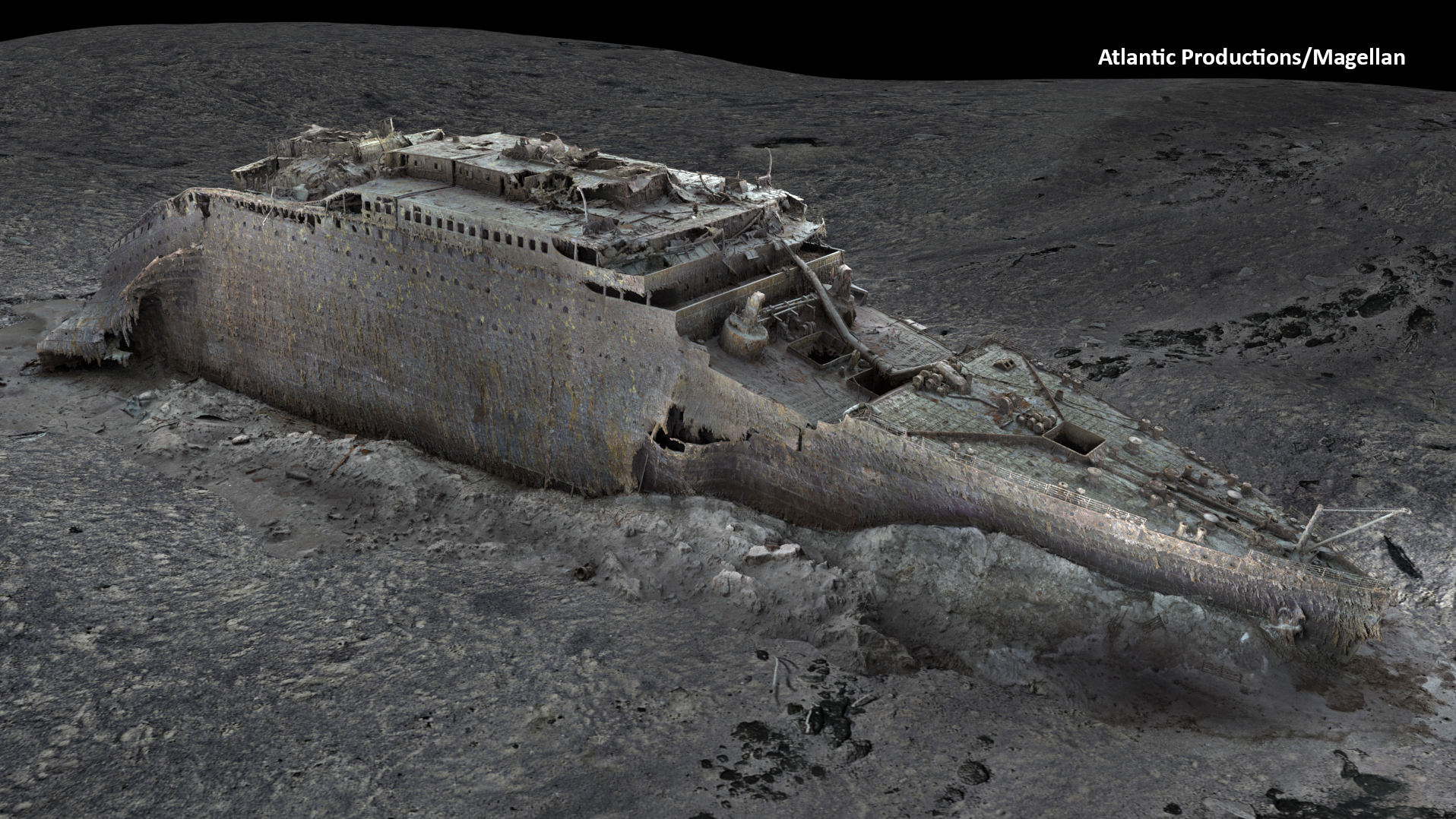
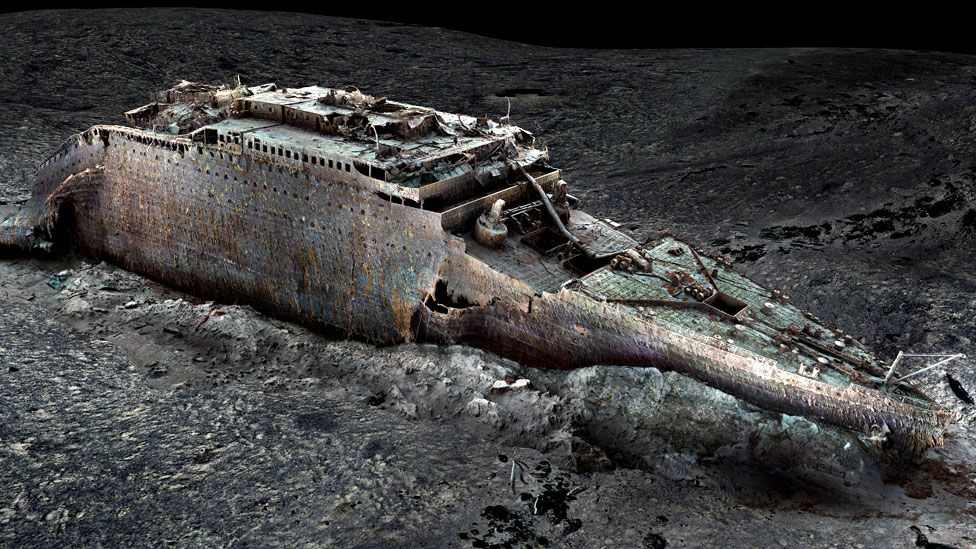
The most important recent development is a complete 3-D scan of the wreck, created from 715,000 underwater imagestaken by robotic submersibles.
Scientists created a full-scale digital model of the wreck site, allowing researchers to study the ship exactly as it lies on the seabed without disturbing it.
What the scans revealed
- The ship broke apart violently before hitting the ocean floor.
- The bow section landed relatively intact, while the stern shattered into a twisted debris field.
- Boilers and valves show engineers were still running steam systems.
- Electrical systems likely stayed active almost until the final sinking.
Evidence suggests that the engineering crew kept the lights and pumps operating during evacuation, probably saving hundreds of lives.
2. The Current Scientific Consensus (Iceberg + Structural Failure)
Today most historians and marine engineers agree on this sequence:
- Iceberg scrape (not a head-on hit).
- Hull plates bent inward.
- Rivets and seams popped open along several compartments.
- Water flooded six watertight compartments.
Titanic was designed to survive flooding in four compartments, but not six.
Instead of one huge hole, researchers believe the iceberg caused several narrow slits along the hull, collectively enough to sink the ship.
3. Modern Engineering Theory: Small Damage, Catastrophic Result
Computer simulations now suggest:
- The iceberg created multiple narrow openings rather than a large gash.
- Some openings may have been only inches wide.
- Spread across six compartments, these small breaches doomed the ship.
This explains why survivors reported only a mild bump, yet the ship still sank.
4. The Weak Rivets Theory
One of the strongest long-running engineering theories involves the rivets used in the hull.
Research found:
- Some rivets were wrought iron instead of stronger steel.
- They contained slag impurities that weakened them.
- When the iceberg scraped the hull, many rivets popped out, opening seams between plates.
Modern fracture analysis suggests the steel and rivets may have failed in brittle fracture, especially in freezing Atlantic temperatures.
5. The Coal Fire Theory (Still Debated)
Another theory says a coal bunker fire weakened the hull before the collision.
Evidence cited by supporters:
- Coal fires were common on steamships.
- Some reports suggested a fire burned for days in one bunker.
Possible effect:
- Steel heated and cooled repeatedly might have weakened a section of hull.
However, most modern historians believe:
- The fire may have existed,
- But it was not the primary cause of the sinking.
6. Navigation and Human Error
Modern analysis also emphasizes operational decisions:
Key factors:
- Titanic was traveling about 22 knots through an iceberg zone.
- Lookouts had no binoculars.
- The ship tried to turn instead of hitting the iceberg head-on.
Ironically, some engineers think a direct collision might not have sunk the ship, because damage would have been limited to fewer compartments.
7. The Breakup Mystery (Solved in the 1980s–2000s)
For decades people debated whether Titanic split.
The wreck discovery in 1985 confirmed:
- The ship broke in two during the sinking, not on the seabed.
- The stern rotated and collapsed while sinking.
The new digital scans now show exact deformation patterns supporting this conclusion.
8. What Scientists Are Studying Now
Research today focuses on:
1. Wreck decay
- Iron-eating bacteria are destroying the hull.
2. Deep-sea ecosystems
- The wreck has become an artificial reef supporting corals and invertebrates.
3. Final sinking dynamics
- Simulations reconstruct the last minutes of the ship.
Bottom Line (Modern Understanding)
The modern consensus is that Titanic sank because of a chain of small failures:
**Iceberg scrape
- weak rivets
- multiple compartment flooding
- design limits of watertight bulkheads
- high speed in ice**
No single cause explains the disaster—it was a cascade of engineering, design, and operational factors.
✅ In short:
The biggest new discovery in recent years is the 3-D digital twin of the wreck, which confirms that a series of small hull breaches and structural failures—not one massive hole—sank the Titanic.
A very helpful summary, and great to have it laid out so clearly.! Glad to know modern technology is doing something more useful than helping us buy stuff!