
 Posted by
 Key Takeaways
- The SS Sultana disaster, the deadliest maritime disaster in United States history, occurred on April 27, 1865, killing over 1,100 people.
- The steamboat was massively overcrowded, carrying more than 2,000 people instead of its designed capacity of 376.
- One of the boilers exploded, causing catastrophic damage and trapping many soldiers in the wreckage.
- Despite its severity, the tragedy received little attention due to the context of the Civil War and Lincoln’s assassination.
- The disaster led to important safety reforms in steamboat regulations and inspections, aiming to prevent similar tragedies.
While many of the world’s worst shipwrecks occurred during wartime at sea, the deadliest maritime disaster in United States history happened on a river.
On April 27, 1865, the Mississippi River steamboat SS Sultana disaster exploded near Memphis, Tennessee, killing more than 1,100 people. The disaster occurred just days after the end of the American Civil War and involved hundreds of Union soldiers returning home from Confederate prison camps.
Despite the enormous loss of life, the tragedy remains far less widely known than other disasters such as the RMS Titanic sinking. Yet the scale of the catastrophe and the lessons it produced played an important role in the history of transportation safety in the United States.
Estimated reading time: 7 minutes
The Steamboat


4
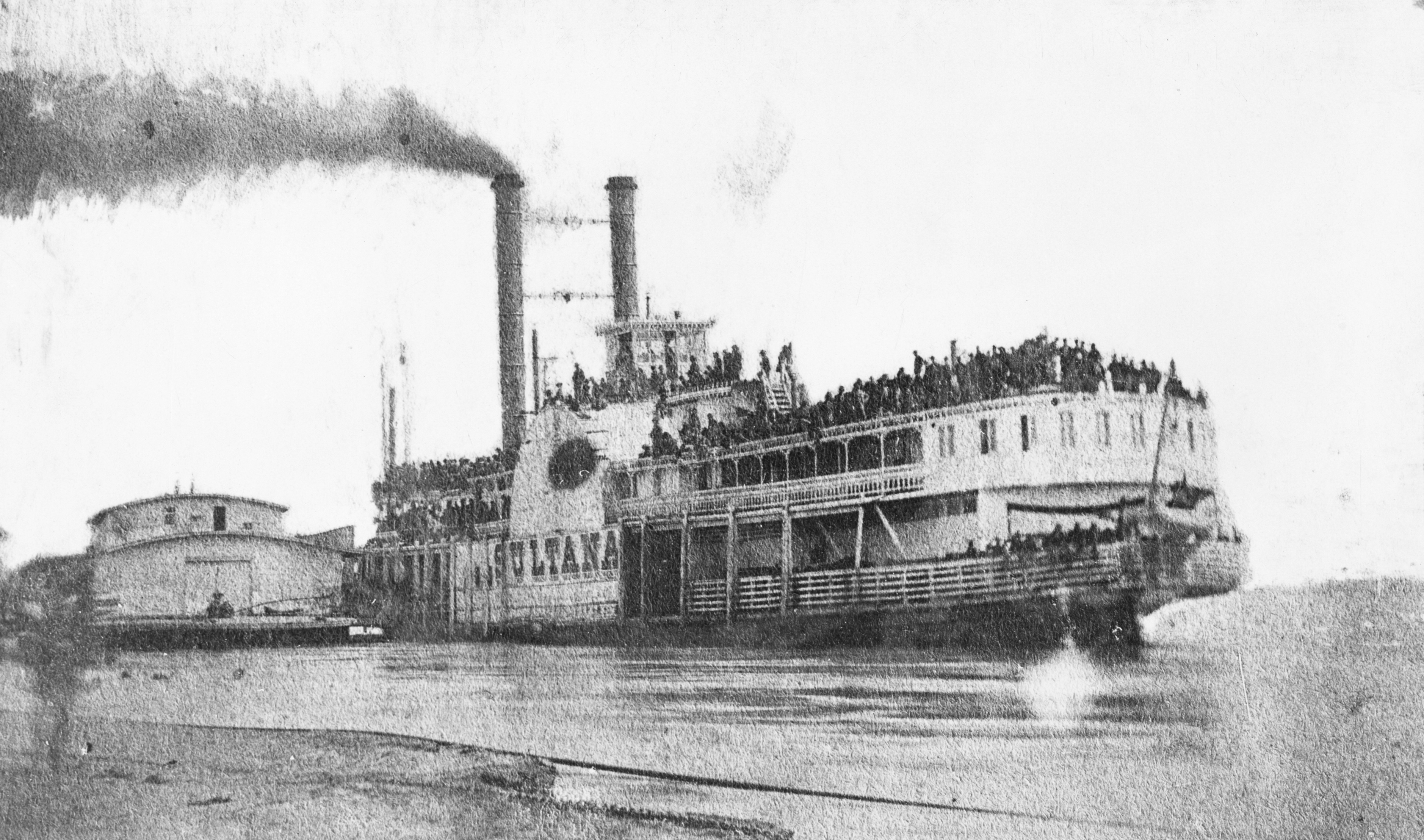
The Sultana was a wooden paddlewheel steamboat built in 1863 and designed primarily to carry passengers and cargo along the Mississippi River.
Like many river steamers of the era, the vessel was powered by large steam boilers that drove the paddle wheels. These boilers operated under high pressure and required careful maintenance and inspection to operate safely.
Under normal circumstances, the Sultana was designed to carry about 376 passengers.
But on its final voyage, the ship would be carrying far more.
Returning Soldiers


4
In April 1865 the Civil War had effectively ended. Thousands of Union soldiers who had survived brutal Confederate prison camps such as Andersonville and Cahaba were being transported north to return home.
Government officials arranged for river steamers to carry the former prisoners north along the Mississippi River.
Because transportation contractors were paid by the number of soldiers transported, there was strong financial incentive to load as many men as possible aboard each vessel.
The Sultana was massively overcrowded. Historians estimate that more than 2,000 people were packed onto a ship designed for fewer than 400 passengers.
Most of the soldiers were weak, malnourished, and exhausted after years of imprisonment.
The Boiler Explosion

4
Shortly after leaving Memphis in the early hours of April 27, 1865, disaster struck.
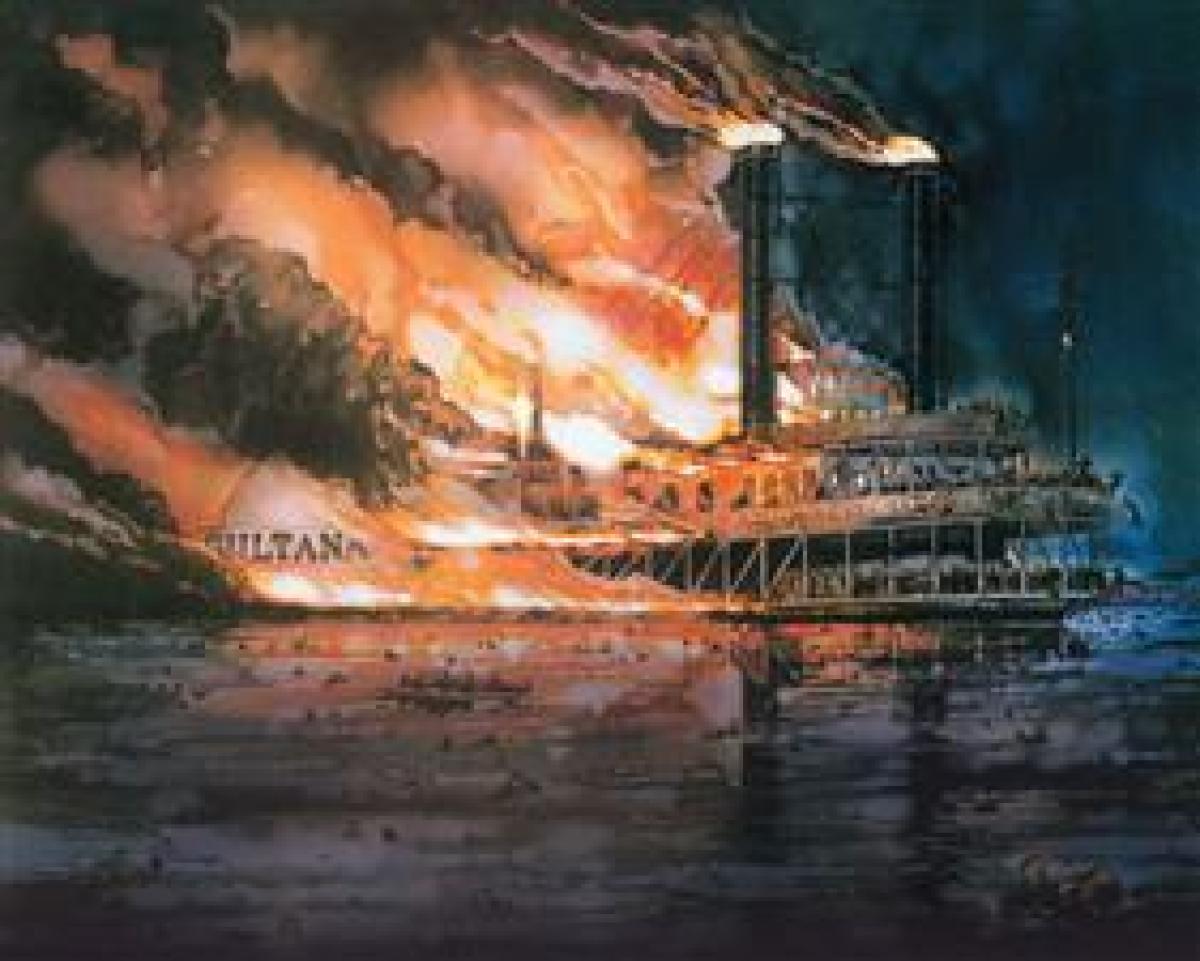
One of the ship’s boilers exploded. The blast quickly triggered a chain reaction in the other boilers, tearing the vessel apart in a massive explosion.
Flames spread rapidly through the wooden structure of the ship.
Hundreds of soldiers were thrown into the river by the blast, while others were trapped in the burning wreckage.
The Mississippi River was swollen with spring floodwaters and running fast. Many survivors struggled in the cold current, unable to reach shore.
Chaos on the River


4
Rescue boats rushed to the scene, and citizens in Memphis launched emergency relief efforts. But the scale of the catastrophe made rescue difficult.
Many of the soldiers who survived the explosion drowned in the river or died later from burns and injuries.
By the end of the tragedy, an estimated 1,100 to 1,200 people had died.
The disaster remains the deadliest maritime accident in United States history.
Why the Disaster Was Overlooked
Despite the enormous loss of life, the Sultana disaster received surprisingly little attention at the time.
Several factors contributed to this.
First, the tragedy occurred during a dramatic moment in American history. The Civil War had just ended, and the nation was focused on reconstruction and political upheaval.
Second, President Abraham Lincoln had been assassinated only two weeks earlier, dominating national news coverage.
As a result, the story of the Sultana quickly faded from national headlines.
Safety Lessons and Reform
The disaster highlighted serious problems in steamboat safety and oversight.
Investigations revealed several contributing factors:
- severe overcrowding
- questionable repairs to the boilers shortly before departure
- weak enforcement of safety regulations
- financial incentives that encouraged overloaded vessels
Although federal steamboat safety laws already existed, enforcement had often been inconsistent.
The tragedy helped strengthen calls for more rigorous inspection of steam boilers, improved licensing for engineers, and stricter passenger limits on river vessels.
These reforms gradually improved safety on American waterways during the late nineteenth century.
Remembering the Victims
Today memorials in Arkansas and Tennessee commemorate the victims of the Sultana disaster. Many of the soldiers who died had already survived the horrors of Civil War prison camps, only to perish within sight of home.
The tragedy stands as a powerful reminder that technological progress must always be matched by careful safety oversight.
In the broader history of maritime disasters—from the Sinking of the Wilhelm Gustloff to the Sinking of the Goya—the Sultana story illustrates how overcrowding, poor maintenance, and regulatory failure can combine to produce catastrophe.
Suggested External Sources
National Park Service history of the Sultana disaster
https://www.nps.gov/articles/the-sultana-disaster.htm
Smithsonian Magazine overview of the tragedy
https://www.smithsonianmag.com/history/remembering-the-sultana-americas-worst-maritime-disaster-180954256/
Encyclopaedia Britannica article
https://www.britannica.com/topic/Sultana
Sultana Disaster Museum historical archive
https://sultanadisastermuseum.com
Civil War Trust historical summary
https://www.battlefields.org/learn/articles/sultana-disaster